
Last updated November 5, 2026
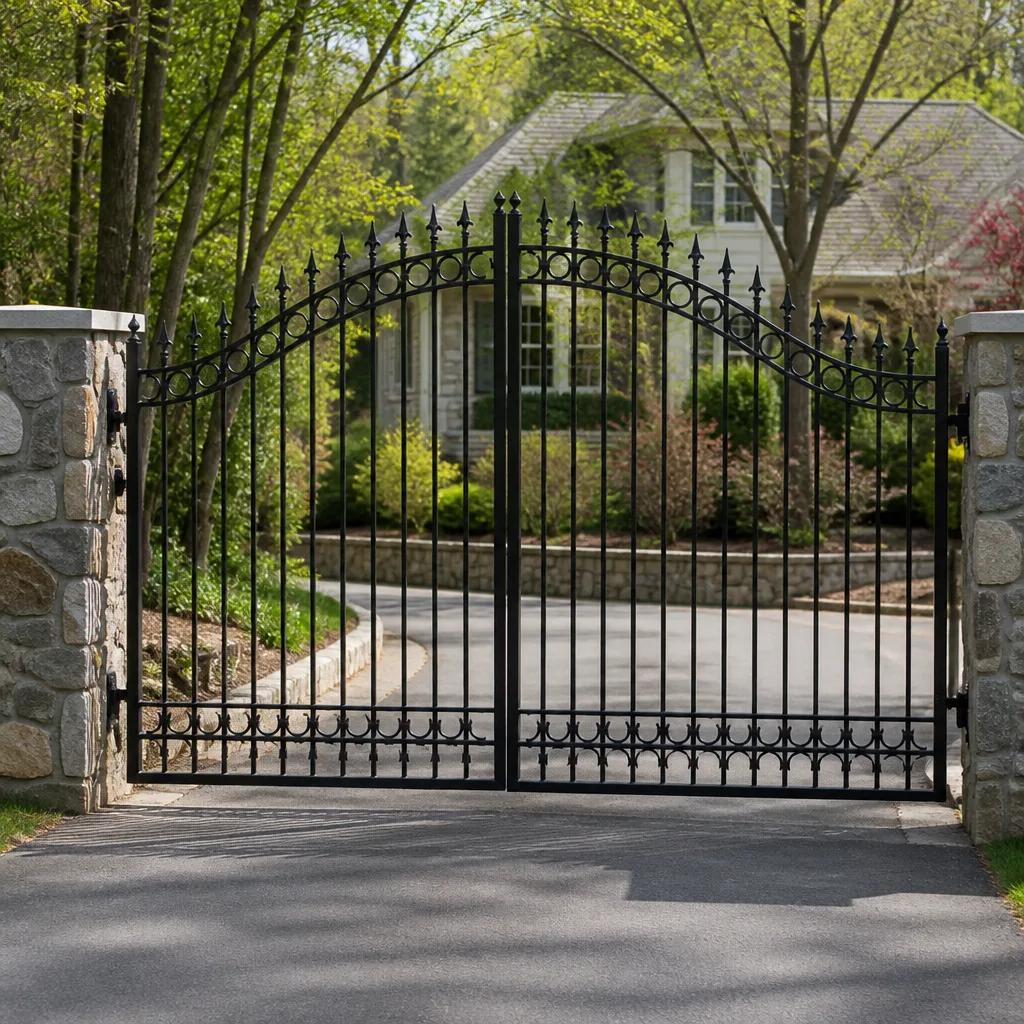 Wrought iron
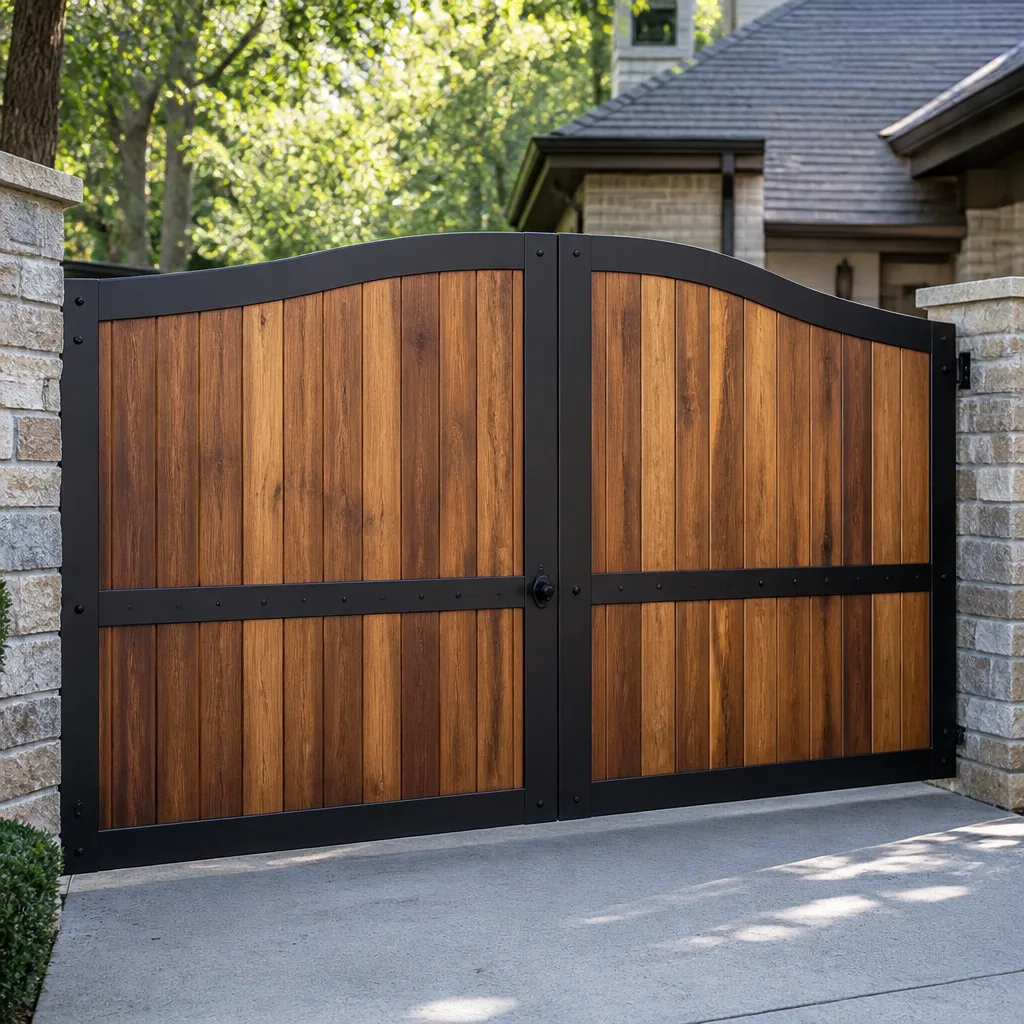 Wood & steel frame
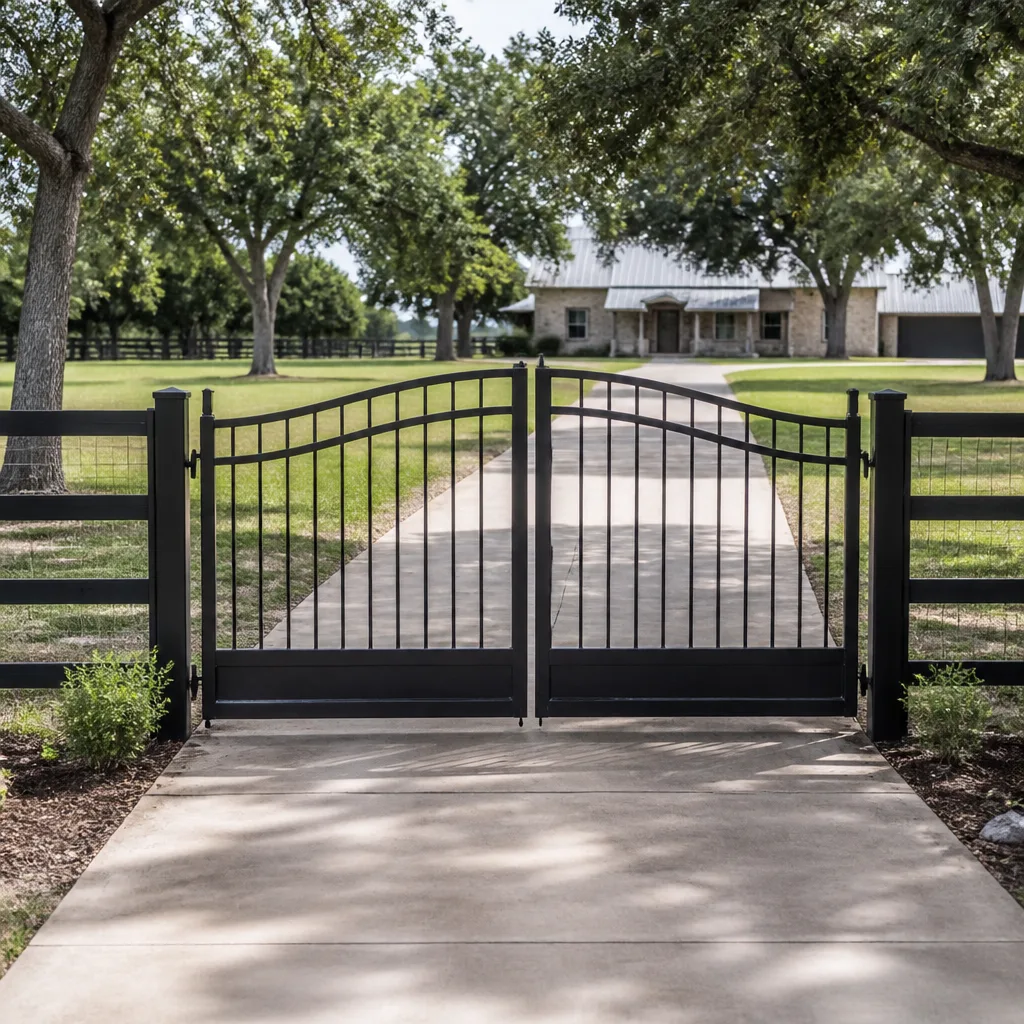 Farm & ranch
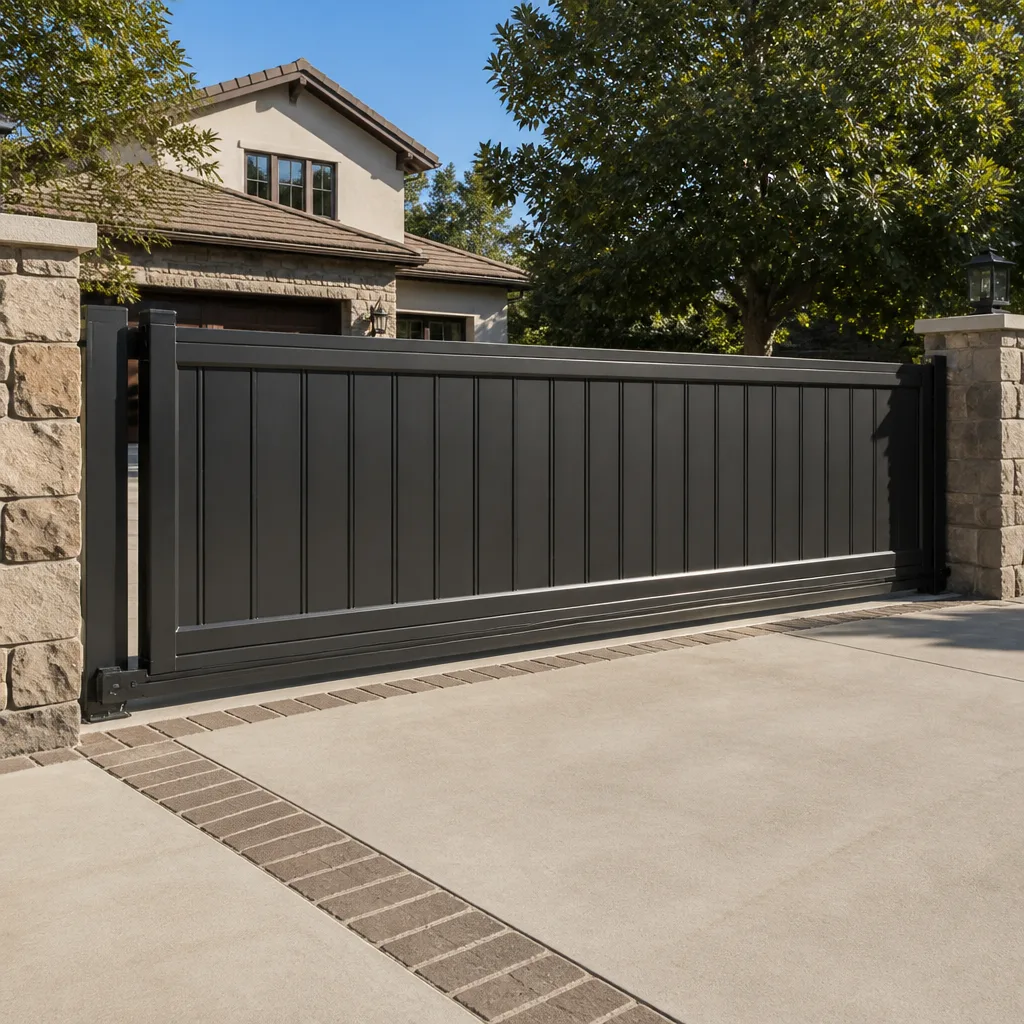 Sliding driveway gates
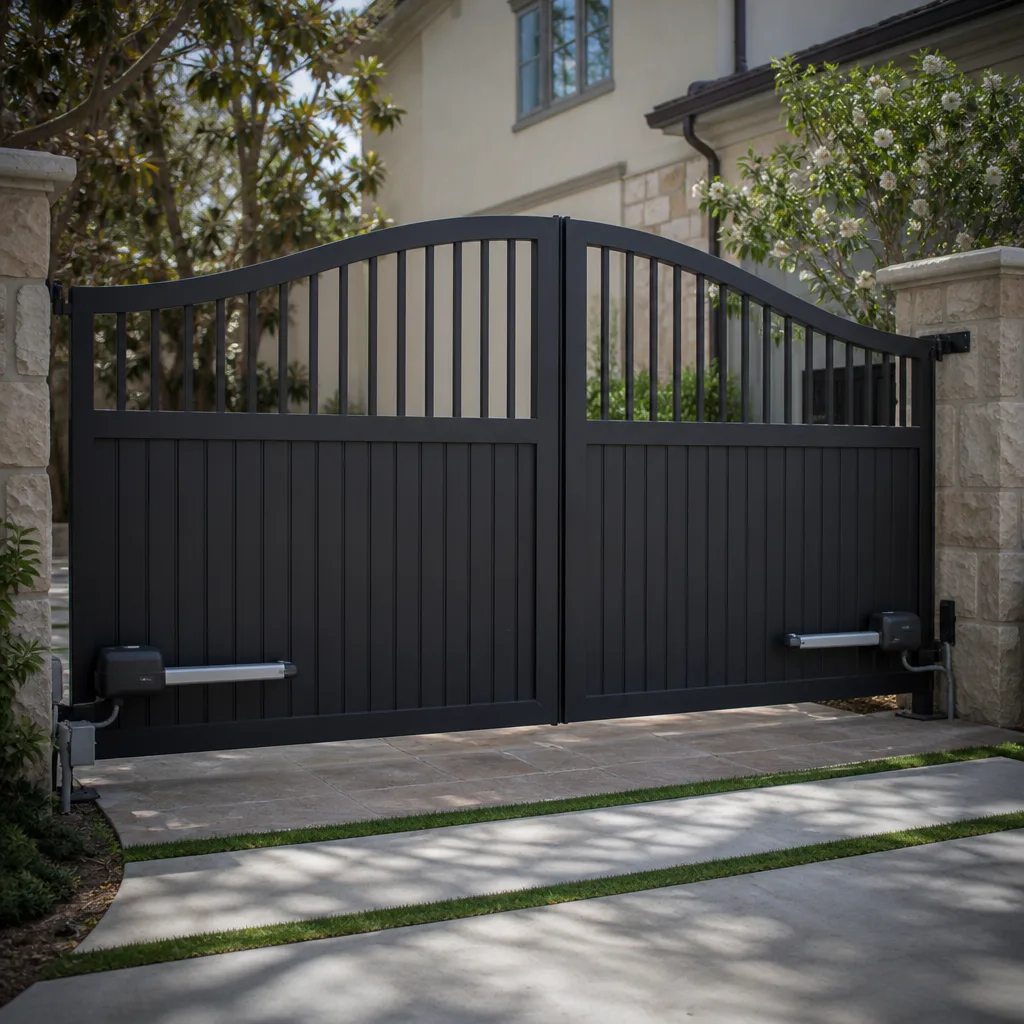 LiftMaster operators
Free on-site gate assessment - hinges, posts, and your LiftMaster or Nice gate operator checked before anything is quoted
The assessment is free and the quote is the invoice.
Get your free estimateGate Repair Warning Signs: An Arleta Homeowner’s Reference Guide
A gate that hesitates for two seconds before moving isn’t “a little slow.” It’s a motor drawing excess current against a mechanical resistance that is about to destroy the drive unit – and that replacement will cost several times what a bearing adjustment would have cost six weeks earlier. Arleta homeowners who learn to read the warning signs their gate already broadcasts catch failures before the gate stops moving entirely. This guide decodes the actual language of gate failure: what each sound means at the component level, which movement patterns point to which parts, and how to separate a repair that can wait from one that cannot.
Styles & brands we work with
- Wrought iron
- Wood & steel frame
- Farm & ranch
- Sliding driveway gates
- LiftMaster operators
Quick Answer
A gate that grinds, clicks, hums without moving, slows down, reverses mid-cycle, or starts showing intermittency at the keypad is sending a specific component-level warning, not a random glitch. In Arleta’s dry valley climate, most residential gate failures trace to three root causes: hardened grease in hinge bearings, capacitor degradation in motor start circuits, and control board failures from voltage irregularity. Each of these produces a distinct, recognizable signature weeks or months before total failure. Recognizing the signature lets you schedule a repair on your terms, before the gate strands you outside the driveway.
Table of Contents
- Noise Diagnostics: What Your Gate Is Telling You
- Movement Pattern Warnings: Intermittent Reversal, Slow Travel, Partial Open
- Electrical Warning Signs at the Control Panel
- Physical Inspection Points: Hinges, Track, and Anchors
- How to Triage Urgency: This Week vs. The Next 48 Hours
- Brand-Specific Warning Patterns to Watch
- Common Mistakes to Avoid
- When to Call a Professional
- Frequently Asked Questions
- The Bottom Line
Noise Diagnostics: What Your Gate Is Telling You
The single most reliable early-warning system on any automated gate is the sound it makes while operating. A healthy gate running on a properly adjusted opener produces a steady, low mechanical noise: the whir of the motor, the even travel of the drive chain or belt, and little else. When that baseline changes, the change itself is diagnostic.
Grinding
A grinding sound means metal is touching metal without adequate lubrication or with misalignment. On a slide gate, this usually points to the drive track and the carrier wheels riding on it. The wheels are sealed bearing assemblies, and in Arleta’s dry, dusty conditions, that grit works its way into the bearing seals over months and years. Once the sealed grease breaks down, the bearing races begin to wear steel-on-steel, and the resulting grind is unmistakeable. On a swing gate, the same grinding signature appears at the hinge bearings where the gate leaf pivots. Grinding is a “this week” warning: the component is already failing, and continued cycles are doing active damage.
Clicking
A rhythmic click with each operating cycle usually traces to the drive mechanism rather than the motor. On chain-driven openers, a worn master link or a stretched chain section will click as it passes over the drive sprocket. On belt-driven operators, a clicking sound often means the belt has developed a flat spot or a frayed section that contacts the tensioner pulley on each revolution. In Arleta’s older neighborhoods, where gates built in the 1990s and early 2000s are common, chain stretch is a predictable wear pattern. Clicking is rarely urgent on its own, but it will not self-correct, and it accelerates sprocket wear with every cycle.
Humming Without Movement
A loud hum with zero gate movement is the most serious warning signal in this category, because it means the motor is energized and drawing current but cannot turn the driven assembly. On swing gates, this is often a failed start capacitor: the component that provides the initial voltage surge to get the motor turning. The motor hums because it wants to start, but the capacitor can no longer deliver, and the armature stalls. On slide gates, a hum with no movement can indicate a seized drive wheel, a misaligned rack that has bound against the pinion gear, or a motor that has lost one of its phases on a three-phase commercial operator. If you hear a humming gate, stop operating it immediately and place an electric gate repair call. Continuing to press the opener button while the motor hums will burn out the motor windings in minutes, and a motor replacement costs far more than a capacitor or bearing.
Squealing
Squealing is a friction warning, usually from a belt slipping on its drive pulley or a bearing that has run dry but not yet begun to wear its races. On Mighty Mule and Ghost Controls swing-gate openers, which use a direct-drive actuator on many residential models, a squeal most often comes from the actuator’s internal thrust bearing under load. On a slide gate with a belt drive, the same sound points to belt tension that has loosened beyond specification. Squealing is a “schedule it this month” signal, but ignored long enough, it becomes grinding.
Movement Pattern Warnings: Intermittent Reversal, Slow Travel, and Partial Open
Changes in how the gate moves are the second category of early warning. They are easier to dismiss than noise, because they happen gradually, but they are just as diagnostic. A gate that traveled its full arc in eleven seconds when it was new and now takes seventeen is not “getting old” in a harmless way. It is working harder than it should.
Intermittent Reversal
A gate that starts to close, stops, and reverses to open without any obstruction in its path is almost always speaking through one of three systems: the safety edge or photocell circuit, the motor force-sensing circuit, or the control board logic. In Arleta, where many residential gates are paired with intercom and keypad systems, intermittent reversal is frequently misdiagnosed as a keypad problem. The more likely explanation: the safety loop or edge sensor is sending a false obstruction signal because its wiring connection has corroded slightly, or because wind-driven debris tripped it once and the board retained the event. Either way, the gate is telling you its safety logic is being triggered by something other than a real obstruction. That is a programming or sensor issue, not a mechanical failure, and it will not resolve by waiting.
Slow Travel
A gate that moves consistently slower than it used to is moving against increased resistance. On a swing gate, the usual culprit is hinge wear: as the hinge bearings lose their lubricity, the actuator has to push harder to get the same angular movement, and the motor draws more current to compensate. On a slide gate, slow travel points to track contamination, a chain or belt that is overtightened, or a drive wheel that has begun to seize. Slowness matters because the motor’s thermal overload protection is calibrated for a specific duty cycle. A gate that runs slow is running hotter, and a motor that runs hot repeatedly has a shortened service life. In our experience with Arleta’s mix of residential and light commercial gates, slow travel is the single most-ignored warning sign, because the gate still moves. It moves until it does not.
Partial Open or Stop Mid-Cycle
A gate that opens partway and stops, or stops mid-cycle and stays there, is most often reporting a limit switch or a control board issue. The limit switches tell the board where the gate is in its travel. When a limit switch drifts out of adjustment, the board receives a “position unknown” signal and halts. On newer systems with magnetic or hall-effect position sensing, a partial stop can mean the position sensor has lost its reference point. On any system, a gate that stops mid-cycle and will not respond to further commands is in a failure state, not a temporary one.
Electrical Warning Signs at the Control Panel
The control panel and keypad are where most homeowners first notice a problem, but they are usually the last place the actual problem lives. The panel is the gate’s instrument cluster, not its engine. What shows up there is the symptom, not the cause.
Keypad Intermittency
When a keypad works sometimes and ignores other inputs, the temptation is to blame the keypad. Before replacing it, check the simplest variables: the wiring connections behind the keypad, the antenna on the receiver, and any interference sources that have appeared recently. In Arleta, adjacent homes with new wireless cameras, smart doorbells, or even some LED lighting controllers can introduce RF noise that makes a keypad’s signal unreliable. A wired keypad that behaves intermittently is more likely a wiring or board-level issue than a keypad failure. Either way, the gate is warning you that its command path is compromised, and a gate that sometimes ignores its keypad will eventually ignore it when you need it most.
Control Panel LED Patterns
Every opener board has diagnostic LEDs, and their patterns are meaningful. A board with a solid power LED but a blinking fault LED is storing an error code. The meaning of that code varies by manufacturer, but the presence of a stored fault means the board detected an out-of-spec condition even if the gate still operates. DoorKing and Elite residential boards, for example, use blinking patterns to indicate overload, obstruction, or sensor circuit faults. If you open the panel and see a fault LED lit, take a note of the pattern before resetting anything. That pattern is the most specific piece of diagnostic information a technician can have.
The Hum-and-Click at the Board
A relay click at the board with no corresponding motor movement is the electrical version of the motor hum described above. It means the board is sending a run command, but the power is not reaching the motor in sufficient strength. On a residential swing gate in Arleta, this often traces to a capacitor that has degraded in the heat of the valley summer. The board clicks, the motor tries, and nothing has enough energy to move the gate. This is a call-now signal: the failed part is cheap, but running the board against a stalled motor is not.
Physical Inspection Points: Hinges, Track, and Anchors
Once a month, a five-minute walk around the gate will reveal problems that the motor cannot report. These are mechanical wear items, and they fail on their own timeline regardless of how well the electronics are working. As Gate Repair Arleta specialists, we look at these points on every call, because they are the cheapest repairs to make early and the most expensive to make late.
- Hinge gap creep: On a swing gate, inspect the barrel hinges where the gate attaches to the post. If you can see a gap beginning to open between the hinge pin and the barrel, or if the gate leaf sits visibly lower on one side, the hinge is wearing. A 1/8-inch gap is within normal wear. A 1/4-inch gap means the hinge is transferring load unevenly, and the other hinges are now carrying extra weight. That cascade is how a single worn hinge becomes a bent gate frame.
- Track bow on a slide gate: Run your eye down the length of the track the gate rides on. It should be a continuous, straight line. Any bow, wave, or kink, even a small one, will cause the drive wheel to climb slightly with each pass, and that climbing motion is what eventually throws a slide gate off its track. In Arleta’s compact soil, a track can shift slowly over several years as the ground beneath it settles, especially after heavy rain cycles.
- Concrete anchor movement: The posts or track anchors embedded in concrete should be rock solid. If you can rock a post by hand, even an eighth of an inch, the anchor is failing. A gate post that moves under load changes the geometry of the entire opening, and every subsequent cycle forces the gate to fight its own mounting. In a slide gate, a shifting concrete pad will eventually crack the track mounting bolts or pull the rail anchors out.
- Wheel and roller condition: Slide gates ride on carrier wheels, and those wheels are wear items. A wheel with a flat spot, visible pitting, or a wobble when you spin it by hand is due for replacement. If one wheel has failed and the gate is riding on the remaining wheels, each surviving wheel is now carrying excess load, and they will fail in sequence.
How to Triage Urgency: This Week vs. The Next 48 Hours
Not every warning sign requires the same response. Here is how to think about urgency when you notice a change in your gate’s behavior in Arleta.
Call This Week
- A new squeal or light grind that appears only on hot afternoons
- A gate that is slightly slower than it was a month ago
- Intermittent keypad or remote behavior that corrects itself after a second press
- A hinge gap that has grown from barely visible to clearly present
- Track bow that is visible but less than half an inch over the track length
Likely Failure Within 48 Hours
- A loud hum with no movement at all
- A gate that reversed mid-cycle and now refuses to operate
- Visible smoke smell from the control panel or motor housing
- A gate that has begun to grind loudly on every cycle
- A slide gate that is visibly riding up on the track or dragging at one end
- A spark, buzz, or arc sound at the keypad or any wiring junction
In the 48-hour category, stop using the gate. Not “use it gently” or “use it only when necessary.” Stop. The gate is failing, and every additional cycle converts a component-level repair into a system-level replacement. Call (855) 473-3106. We answer 24/7. Fast dispatch from 7am to 7pm, Sunday through Friday.
Brand-Specific Warning Patterns to Watch
Different manufacturers put different load-bearing components in different positions, and their failure signatures reflect that. Arleta homeowners with these brands – Ghost Controls, DoorKing, Elite, and Mighty Mule – should know the patterns most common to their specific system.
Ghost Controls and Mighty Mule
These two brands dominate the residential DIY-installed swing gate market, and their systems share a design philosophy: a compact actuator that mounts directly to the gate leaf and post. The actuator’s internal thrust bearing takes the full push-pull load of the gate with every cycle. When that bearing begins to wear, the sound is a soft clunk at the moment the gate starts and stops, not a continuous grind. The actuator may also run warm to the touch after normal cycling. Both brands use a worm gear reduction, and worm gears are sensitive to lubrication breakdown, especially after Arleta’s hot summers bake the factory grease. A Ghost Controls or Mighty Mule actuator that sounds like it is “working harder” is telling you the gear is doing exactly that.
DoorKing and Elite
DoorKing and Elite span the residential-to-light-commercial space, and their systems are built around heavier pad-mount operators and, on larger gates, external control boards with more diagnostic capability. The most common early warning on these systems is irregular travel speed: the gate speeds up and slows down at points in the cycle where it used to travel at a constant rate. That pattern points to a motor that is losing consistency, often due to brush wear in DC systems or a start capacitor that is marginal. Both brands also use limit switch assemblies that can drift out of adjustment, and the resulting behavior is a gate that opens fully but stops an inch or two short of closed, or overtravels and bumps the stop.
Whatever brand is on the property, we work on it. Nine manufacturers, one specialist team. A diagnostic visit starts with the assumption that the gate knows why it is failing, and the job is to listen.
Common Mistakes to Avoid
- Resetting the control board before noting the fault LED pattern. The pattern is the diagnostic record. Reset it and you have erased the gate’s explanation of its own failure. Take a photo first.
- Repeatedly pressing the opener during a hum-with-no-movement condition. Each press sends full current into a stalled motor. This converts a capacitor replacement into a motor rebuild. A single hum is a warning; repeated hums are a self-inflicted injury.
- Lubricating without cleaning first. In Arleta’s dust, adding fresh grease over old, grit-loaded grease just turns the new grease into an abrasive paste. Clean the bearing surface, then lubricate.
- Assuming the keypad is the problem because it acts intermittently. The keypad is the visible part, but the fault usually lives in the wiring, the receiver, or the board. Replacing the keypad on a wiring fault does not fix the gate, and it adds a bill to nothing.
- Tightening a sagging chain without checking the drive sprocket. A stretched chain means the chain itself is worn, and tightening it transfers that wear load to the sprocket teeth. You turn one worn part into two.
- Leaving a slide gate on “operator bypass” mode after a manual open. If the gate is manually disconnected from the opener and left that way, the motor will run the drive assembly with no load the next time someone presses the opener, and the limits will be out of sync. Re-engage the operator properly or leave it clearly flagged.
- Ignoring a slow gate because it still opens. The thermal overload on the motor is not forgiving. A gate that runs slow is running hot, and heat is what kills motor windings. Slow is a repair warning, not a personality trait.
When to Call a Professional
Some warning signs warrant a service visit the day you notice them. Any loud hum with no movement, any sparking or arcing at a wiring junction, any gate that has come off its track or slipped its chain, and any control panel that smells of hot electronics or shows a stored fault you do not understand – these are not diagnostic puzzles to solve over a weekend. They are active failures in progress. A gate’s motor, wiring, and operator are integrated systems, and poking at one part without understanding the circuit it lives in is how a $40 capacitor job becomes a $900 motor replacement. If you are in Arleta and the gate is talking, call a specialist who speaks the language. Gate repair service includes a free estimate, and the price is agreed in writing before any work starts. Call (855) 473-3106. We answer 24/7. Fast dispatch from 7am to 7pm, Sunday through Friday.
Frequently Asked Questions
The most common warning sign is slow travel: a gate that opens or closes noticeably slower than it did when it was new, usually because hinge bearings or drive components are wearing and forcing the motor to work against increasing resistance. In Arleta’s dry, dusty conditions, bearing contamination leads the list. Call (855) 473-3106 for a free estimate if your gate is slowing down.
A gate that hums loudly without moving, sparks at any wiring point, has begun to grind on every cycle, or reverses intermittently for no reason is likely within days of total failure. Stop using the gate and call (855) 473-3106. We answer 24/7. Fast dispatch from 7am to 7pm, Sunday through Friday.
We can narrow the likely fault significantly by listening to the described behavior: a hum points to the motor circuit, a grind points to the mechanical drive, and a click with no movement points to the board or capacitor. But a definitive diagnosis requires an on-site visit with the gate in front of us. The estimate for that visit is free, and the written estimate sets the price before any work begins.
Yes. We work on Ghost Controls, Mighty Mule, DoorKing, Elite, and the other major gate brands common in Arleta. Nine manufacturers, one specialist team. Call (855) 473-3106 and tell us what brand is on your gate; we know its failure patterns before we arrive.
Pricing depends on the specific component that has failed and the brand of system installed. The estimate is free, and the price is quoted and agreed before any work starts. There is never a fee to learn what the repair would be. Call (855) 473-3106 for a free on-site estimate.
Stop operating the gate immediately. A gate off its track is a crushing hazard, and forcing the opener to cycle will damage the drive assembly and potentially the motor. Do not try to lift a heavy slide gate back onto its track by hand. Call (855) 473-3106 and get a technician dispatched. We answer 24/7.
The Bottom Line
Gates do not fail silently. They grind, click, hum, slow down, reverse at odd moments, and flash fault codes that most homeowners never look at. The difference between a cheap bearing replacement and an expensive motor rebuild is usually measured in weeks: the time between the first symptom and the call. Arleta’s dry heat stresses gate components in predictable ways, and a homeowner who checks the hinges, listens to the motor, and notes the panel LEDs is never surprised by a dead gate. When the warning signs appear, get a free estimate from a gate specialist who works on your brand, not a generalist guessing at it. Call (855) 473-3106. We answer 24/7. Fast dispatch from 7am to 7pm, Sunday through Friday.
Written by the team at Gate Repair Arleta, serving Arleta since 2018.
See the difference
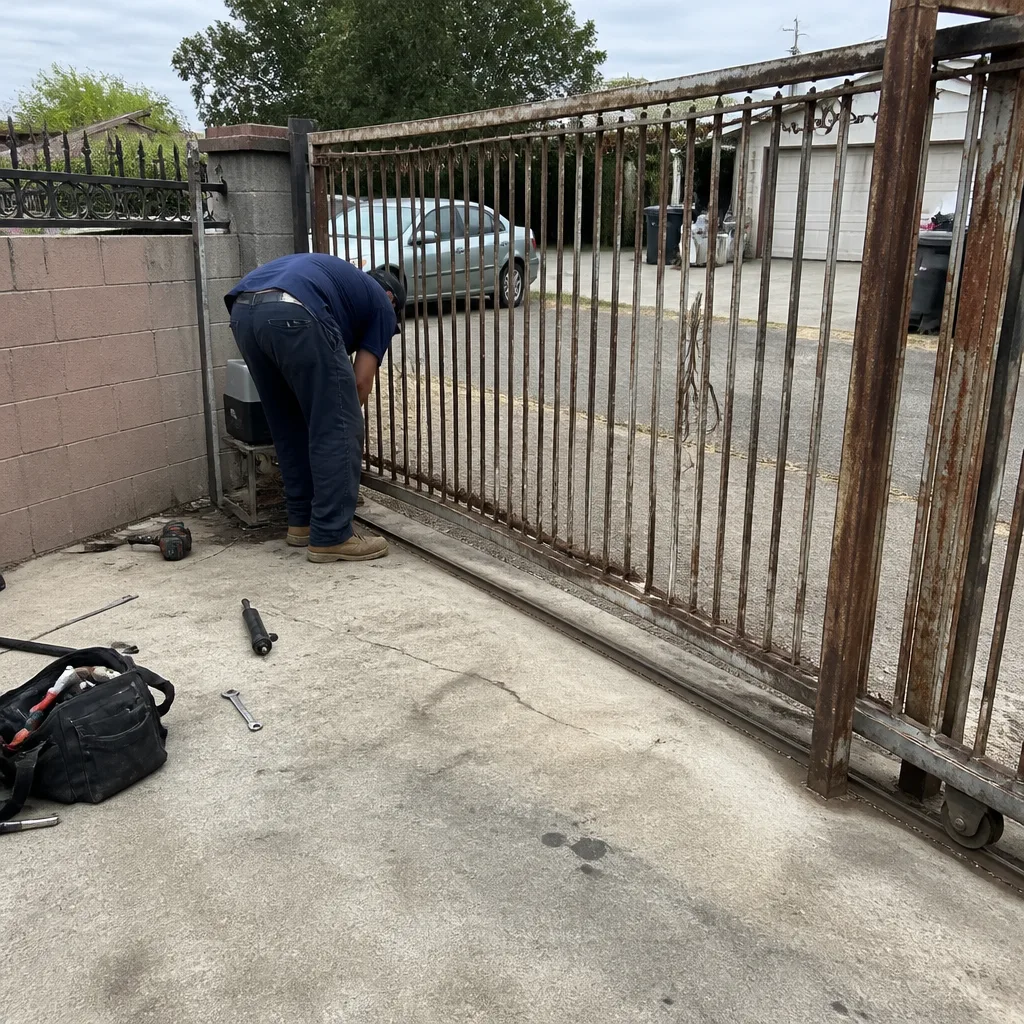 Before
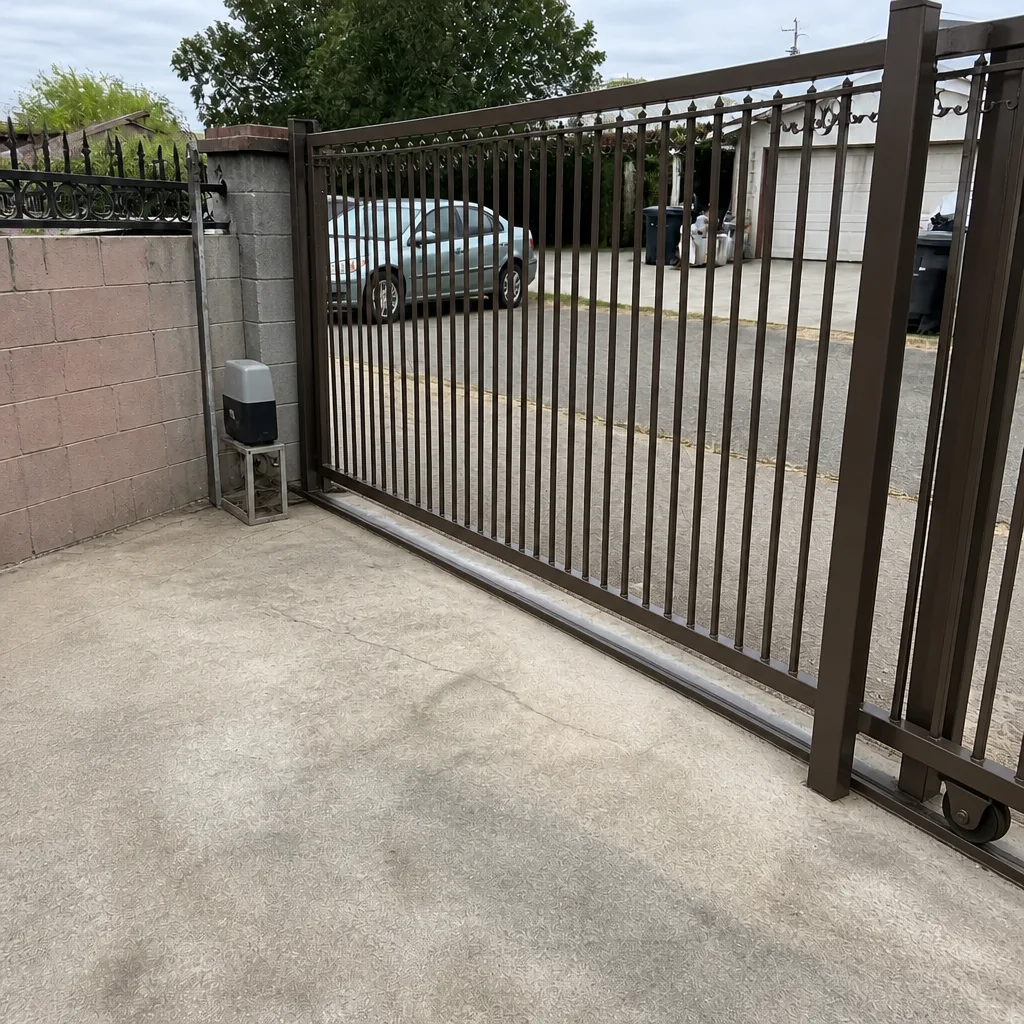 After
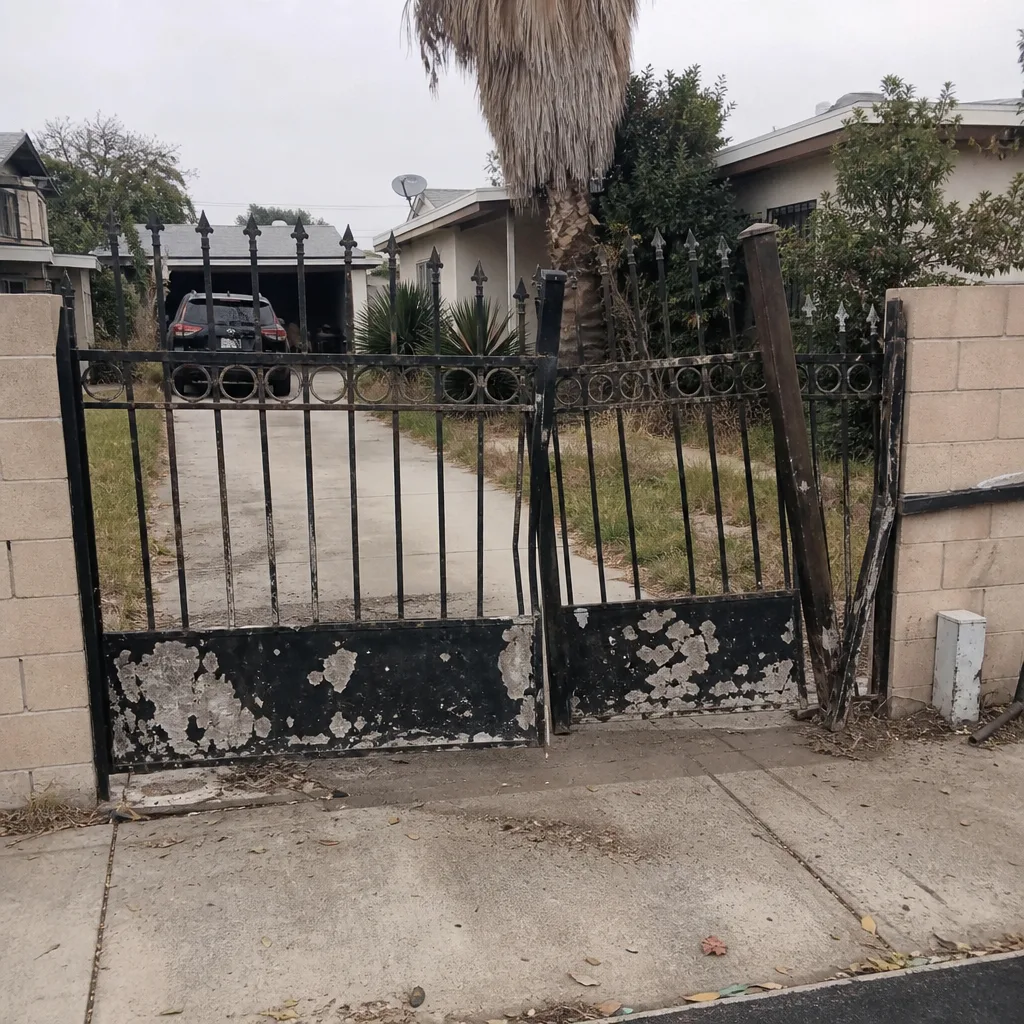 Before
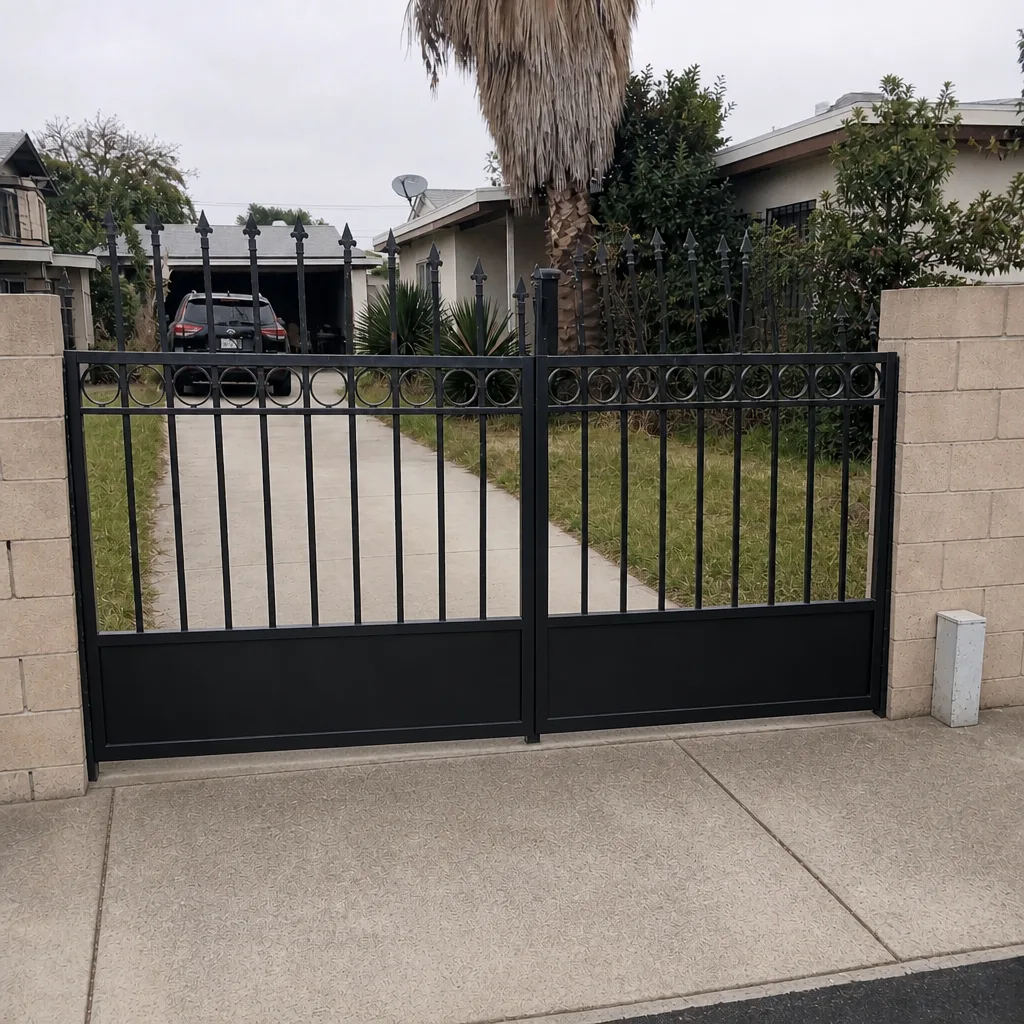 After
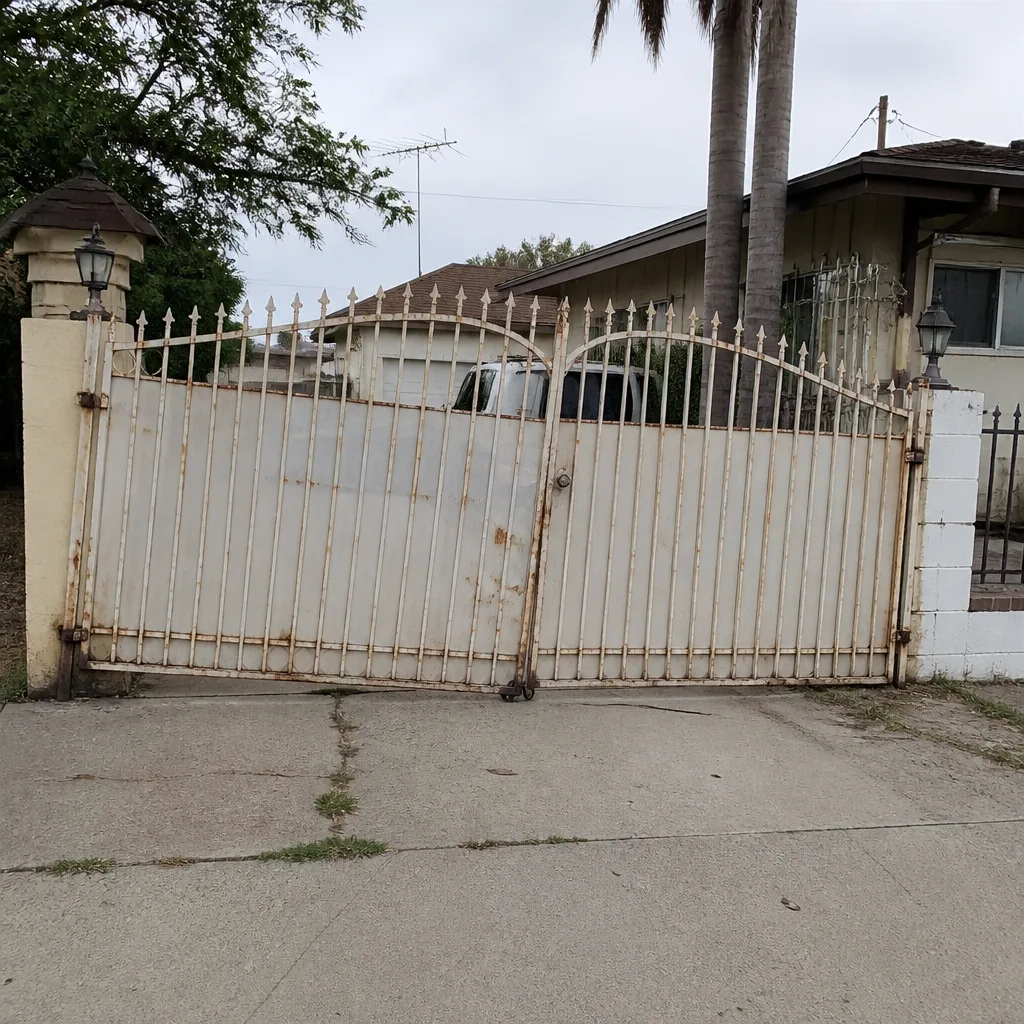 Before
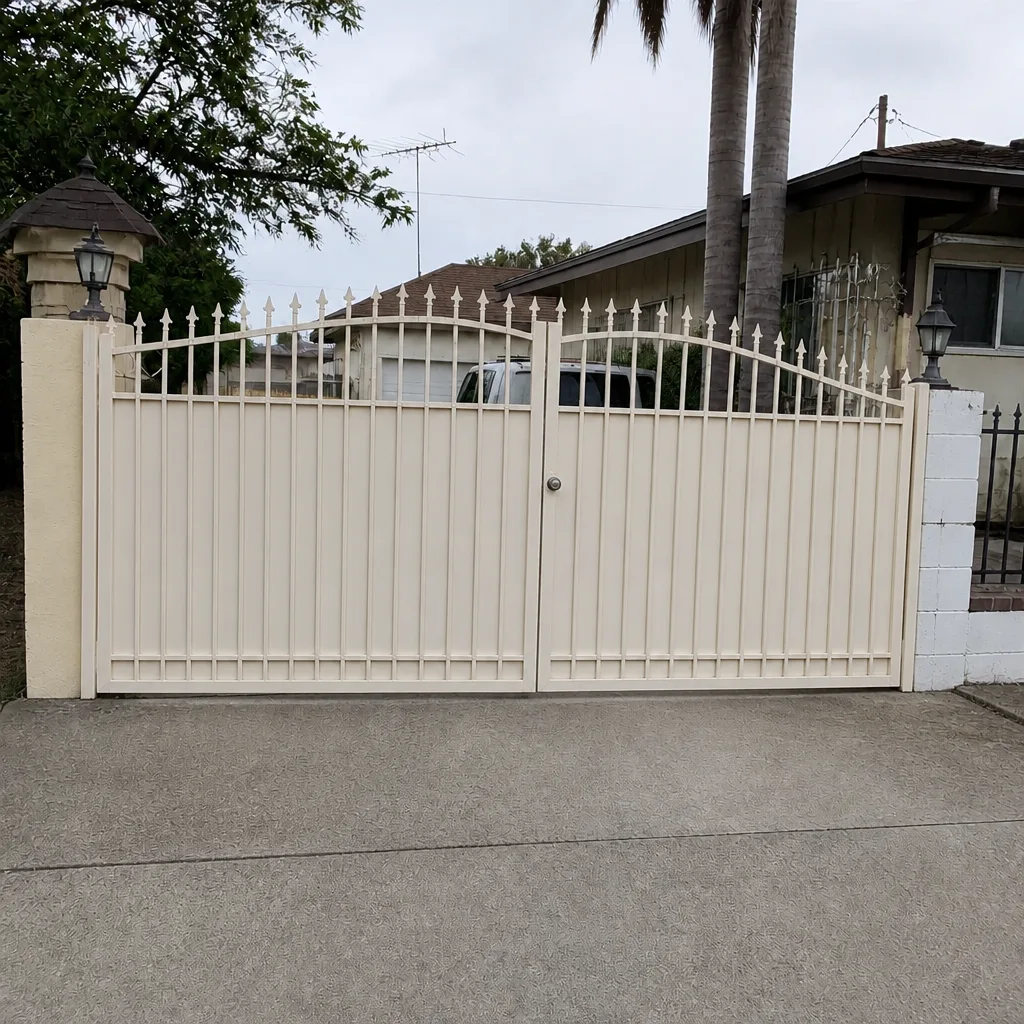 After