
Last updated November 5, 2026
 Wrought iron
 Wood & steel frame
 Farm & ranch
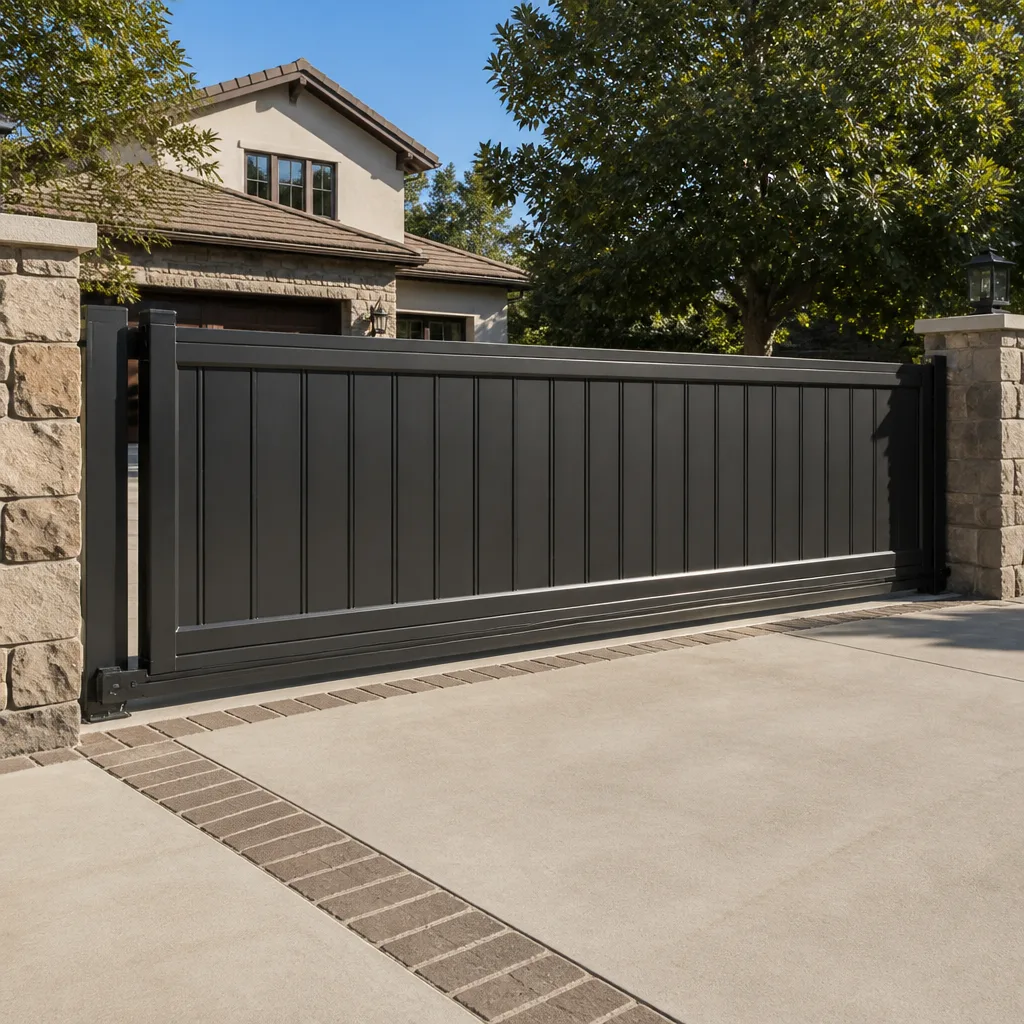 Sliding driveway gates
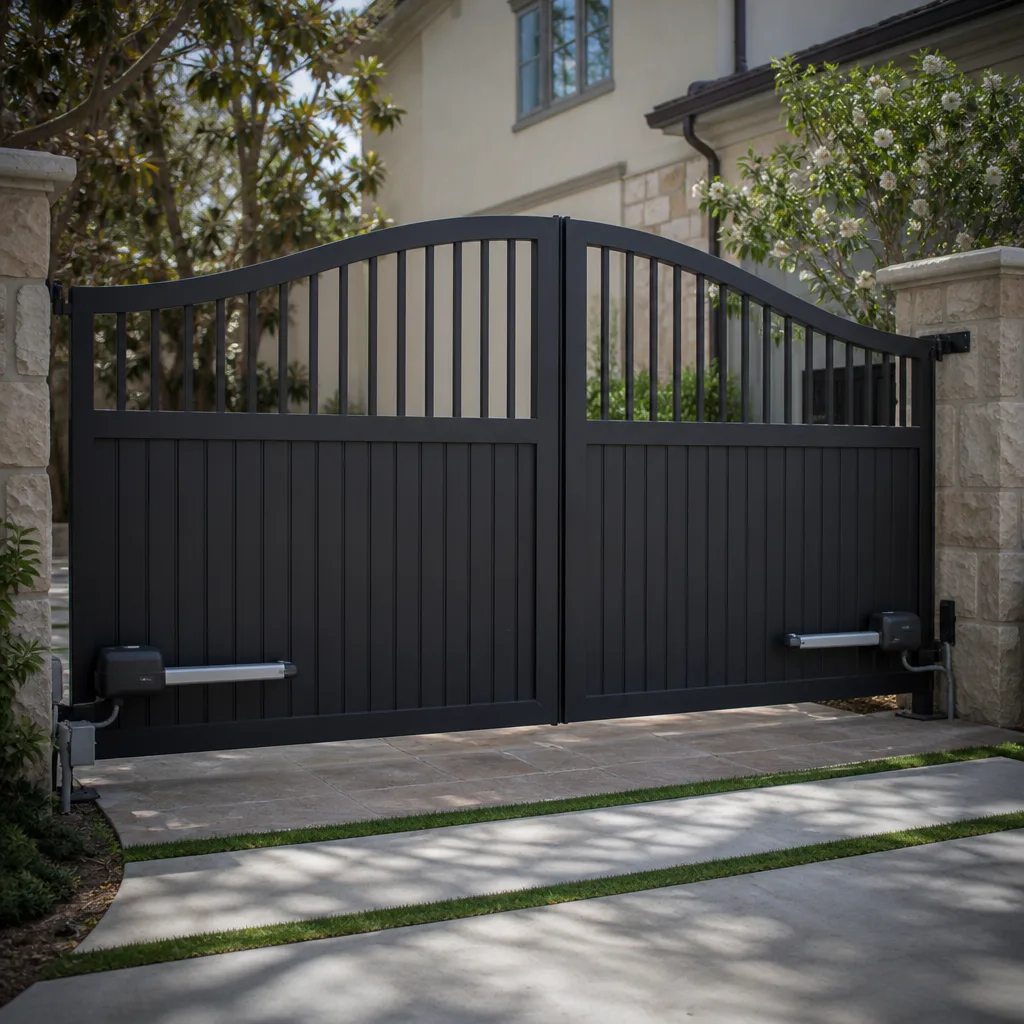 LiftMaster operators
Free on-site gate assessment - hinges, posts, and your LiftMaster or Nice gate operator checked before anything is quoted
The assessment is free and the quote is the invoice.
Get your free estimateSeasonal Gate Repair Care for Arleta: Year-Round Homeowner’s Guide
Most gate maintenance calendars you’ll find online were written for places with four real seasons, and they don’t line up with what actually happens to an automated gate in Arleta. Here, the meaningful seasons are heat, wind, and condensation cycles, and they hit your gate at very specific times of year. A gate operator rated to 110°F can still cook itself inside a west-facing pillar in August because ambient rating and installed operating temperature are not the same number. This guide schedules maintenance around the three actual stress periods we see in Arleta, not around a generic spring/fall checklist. You’ll learn what fails, when it fails, and what to do about it before you’re standing outside your own driveway wondering why the gate won’t move.
Quick Answer
Seasonal gate care in Arleta means preparing for three distinct stress cycles: summer heat that degrades control boards and power supplies inside enclosed pillars, Santa Ana wind events from October through February that stress hinge hardware and slide gate guides, and winter condensation cycles that corrode electrical connections and battery backup units. The most effective approach is three targeted maintenance passes per year, one before each stress period, rather than a single annual tune-up. Homeowners who follow this schedule see meaningfully fewer mid-season failures and avoid the security gap of a gate stuck open when they need it closed.
Styles & brands we work with
- Wrought iron
- Wood & steel frame
- Farm & ranch
- Sliding driveway gates
- LiftMaster operators
Table of Contents
- How Valley Heat Cycles Stress Gate Electronics
- Santa Ana Wind Season Gate Checklist
- Winter Condensation and Electrical Enclosure Care
- Wildfire Smoke and Photo Eye Sensor Degradation
- Month-by-Month Gate Maintenance Calendar for Arleta
- What to Check Yourself vs. What to Leave Alone
- Common Mistakes to Avoid
- When to Call a Professional
How Valley Heat Cycles Stress Gate Electronics
Arleta sits in the eastern San Fernando Valley, where summer temperatures routinely climb into the 90s and low 100s from July through September. Your gate operator lives inside a metal or stucco pillar, and that pillar acts like a small oven. The rating printed on the control board, typically an operating range up to 110°F or 120°F, describes the ambient air temperature the board can handle when it has adequate ventilation. Inside a closed pillar with no airflow, the actual temperature around the board can run 15 to 25 degrees hotter than the air outside.
What fails first in sustained heat is rarely dramatic. Capacitors on the control board degrade faster. Solder joints expand and contract across daily cycles, and after enough cycles they develop hairline cracks that cause intermittent failures, the gate works fine in the morning, then refuses to respond at 3 p.m. Power supply units fail more often in July and August than any other month, and batteries inside backup units age faster when they sit in a hot enclosure all season.
Thermal management steps that actually help:
- Check pillar ventilation before peak heat arrives. Louvered vents should be clear of dust, cobwebs, and debris. If your pillar has no venting, that’s a conversation worth having with a gate specialist before August.
- Add a reflective shield to west-facing control boxes. The sun hits the west side of the property in the hottest part of the afternoon, and a simple radiant barrier mounted between the housing and the afternoon sun can drop internal temperatures significantly.
- Replace control board standby batteries on schedule. Heat shortens battery life. If your keypad or intercom unit has a backup battery more than two years old, replace it in spring so it doesn’t die mid-summer.
- Test the auto-close timer and safety edges before heat waves. Heat-related board failures often show up first as erratic auto-close behavior, and catching that early beats a full shutdown later.
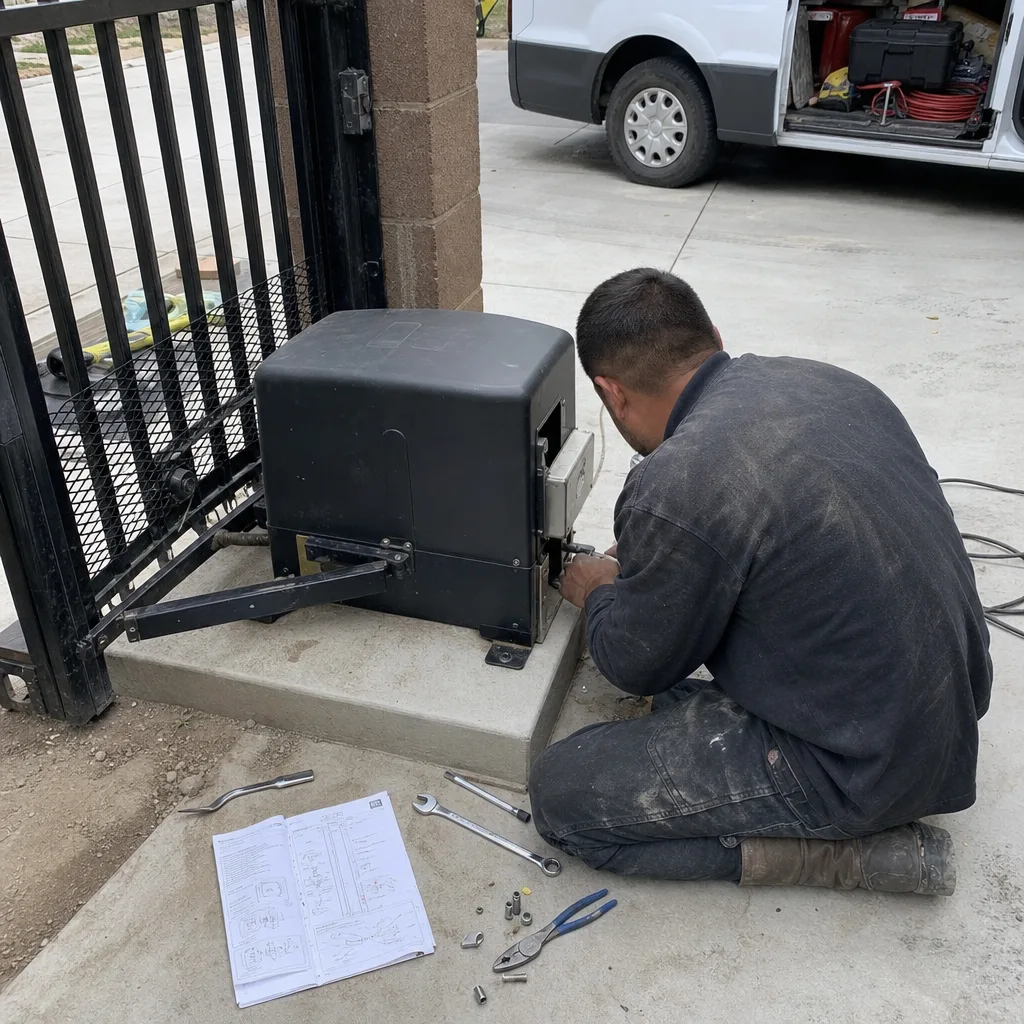
For electric gate systems, the control board is the brain of everything, and in our experience, heat-related intermittent failures are the most common call we get in Arleta between mid-July and mid-September. If your gate starts acting differently on hot afternoons, that’s a diagnostic signal, not a coincidence. We work on Linear, Viking, BFT, and Ghost Controls systems regularly, and the heat stress pattern looks similar across all of them: the enclosure matters more than the brand.
Santa Ana Wind Event Gate Checklist
Santa Ana winds typically arrive in Arleta between late September and early November, with additional events through February. These winds are dry, gusty, and persistent, and they punish gate hardware in ways that normal weather does not. A swing gate in a Santa Ana event acts like a sail. Every gust loads the hinges, the operator arm, and the mounting points with cyclic stress. A slide gate has a different problem: wind drives dust and grit into the V-track or cantilever rollers, and that abrasive paste accelerates wear on the guide rollers and carrier wheels.
For swing gates, the highest-stress components during wind season are the hinge brackets and the operator-to-leaf attachment points. Gate hinges have different grades, and a residential-grade hinge that works fine in calm air can loosen or wallow out its mounting holes after a few hard wind seasons. The fix is not just tightening bolts. Once a bolt hole has elongated, the hinge will come loose again until the mounting is reinforced or the hinge is replaced with a heavier grade.
For slide gates, the cantilever design handles wind better than a V-track because it doesn’t rely on a ground-level track that can fill with debris. But cantilever rollers carry the entire gate weight, and wind-driven dust shortens their life. V-track gates need the track cleared after every wind event, and the guide rollers at the bottom of the gate should be checked for free rotation.
Santa Ana season checklist, in order of priority:
- Inspect swing gate hinges for movement. With the gate in the closed position, push on the latch edge. More than about a quarter inch of vertical play means the hinge pins or brackets are wearing.
- Check operator arm attachment bolts. Wind loading transfers through the arm into the operator and the gate frame. Loose bolts here cause slamming, erratic motion, and eventually a stripped drive.
- Clear slide gate tracks after each wind event. Don’t wait for the next one. Grit in a V-track gets ground into the rollers every time the gate cycles.
- Test the obstruction sensitivity before the first big wind event. A gate that doesn’t reverse properly during wind gusts can bind against its own track or damage the operator’s internal gears.
- Check the gate stop and catch post hardware. These take the full hit when the wind slams the gate closed, and loose stops let that impact travel into the operator.
If your gate is exposed on a north-south lot line where the Santa Anas hit it directly, do this checklist twice per season. The wind stress in Arleta varies by lot, and the difference between a sheltered interior lot and an exposed corner lot is significant.
Winter Condensation and Electrical Enclosure Care
Arleta winters don’t freeze, but they do something that causes just as many electrical problems: the temperature swings between cool nights in the 40s and daytime highs in the 60s and 70s, and that swing produces condensation inside gate enclosures and electrical boxes. Moisture forms on control boards, terminal strips, and connectors. Over time, that moisture corrodes connections, grows a fine film of oxidation on circuit board traces, and shortens the life of every electrical component in the enclosure.
Battery backup units are especially vulnerable. The sealed lead-acid batteries inside most gate battery backups vent small amounts of moisture during charge cycles, and condensation adds to that. Corroded battery terminals are a common winter find, and a battery with corroded terminals won’t carry the load when the power drops.
Winter condensation protocol for Arleta homeowners:
- Open the control enclosure once in late fall. Look for any sign of moisture: water spots, white powder around terminals, green corrosion on copper, or a musty smell. These are all evidence that condensation is happening inside.
- Check the enclosure gasket. Most control boxes have a rubber gasket where the door closes. If it’s cracked, flattened, or missing, replace it. We also see cable entry points left unsealed, and that’s how moisture-laden air gets in.
- Add a desiccant pack if the enclosure shows moisture. Silica gel packs sized for enclosure volume absorb moisture and protect the board. They need replacement every few months during winter.
- Inspect battery backup terminals in December. Clean any corrosion and confirm the battery still holds a charge. If the unit is three years old or older, plan on replacement before the next Santa Ana season knocks out power.
- Test the gate immediately after a rain event. Condensation problems show up first when the gate has sat cold and wet overnight, then warms up in morning sun.
The good news is that Arleta’s climate makes winter condensation manageable. Unlike coastal cities that fight salt air and constant humidity, Arleta’s humidity is typically low, so the problem is intermittent rather than constant. A sealed enclosure with a fresh gasket and a desiccant pack solves most condensation issues.
Wildfire Smoke and Photo Eye Sensor Degradation
Fall fire season brings smoke into the San Fernando Valley, and smoke particulate does two things to a gate system. First, it settles on photo eye sensors, the small lenses mounted near the ground on either side of the gate opening. A film of smoke particulate on the lens scatters the infrared beam, and the photo eye false-triggers, thinking something is in the gate path. The gate refuses to close, or reverses mid-cycle, or opens and won’t close without holding the button down.
Second, the particulate is slightly acidic, and when it settles on circuit boards and connectors and then combines with even small amounts of moisture, it accelerates corrosion. A gate that’s been through one smoky fall season won’t show obvious damage, but repeated exposure across several years degrades the internals measurably.
Cleaning intervals for Arleta’s fall smoke season:
- Clean photo eye lenses every two weeks during active fire season. Use a soft cloth and glass cleaner. Don’t use anything abrasive, and don’t spray cleaner directly onto the sensor housing; spray the cloth.
- Clean more frequently if fires are within a few miles. The particulate load in Arleta varies by fire proximity and wind direction. When the sky looks hazy and you can smell smoke, clean the sensors that week.
- Inspect the photo eye alignment after cleaning. Some models have an alignment indicator light; if yours doesn’t, simply verify the gate closes normally after cleaning.
- Check the enclosure interior after fire season ends. Open the control box, look for a fine gray film, and wipe down accessible surfaces with a dry cloth. Don’t use liquids on a powered board.
Photo eye issues are the most common smoke-related gate complaint we hear about in fall, and the fix is usually simple cleaning rather than a part failure. But if cleaning doesn’t restore normal operation, the sensor may have aged out, and replacement is straightforward.
Month-by-Month Gate Maintenance Calendar for Arleta
Instead of one big service every spring, this calendar divides maintenance into three targeted passes, one before each stress period, plus light monthly checks. This matches Arleta’s actual climate rhythm better than a generic national calendar.
January – February
Focus: Santa Ana wind and condensation. Wind season is active, and condensation cycles continue. Check hinge tightness after each major wind event. Open the control enclosure monthly and look for moisture. Test the gate after rain. If the gate has battery backup, test it now by disconnecting AC power and cycling the gate.
March – April
Focus: Post-winter inspection and pre-heat prep. Condensation season winds down. This is the best time for a thorough inspection: clean every surface, check for corrosion you missed, replace backup batteries that are aging, and verify all safety devices work. Make any non-urgent repairs now, before the heat arrives.
May – June
Focus: Pre-heat thermal prep. Check pillar and enclosure ventilation before the first heat wave. Clear vents, add a radiant barrier to west-facing boxes if needed, and test the gate during the hottest part of the afternoon. If the gate misbehaves when it’s hot, the problem is likely thermal, and it won’t fix itself.
July – August – September
Focus: Heat stress monitoring. Peak heat in Arleta. Monitor the gate for heat-related intermittent failures: erratic auto-close, unresponsive keypads, sluggish motors. Clean photo eyes monthly. If the gate fails on a hot afternoon but works the next morning, schedule a diagnostic visit; the problem is real and it’s inside the control board.
October – November
Focus: Santa Ana preparation and smoke season. Do the full Santa Ana checklist before the first major wind event. Clean photo eye lenses every two weeks if fires are burning nearby. Check slide gate tracks after every wind event. Test obstruction sensitivity before the gate has to fight a wind gust.
December
Focus: Condensation cycle restart. The cool, wet season begins again. Seal the enclosure if needed, replace the desiccant pack, inspect battery terminals, and test the gate after the first real rain. If you only do three maintenance passes per year, do them in March, June, and October; those are the pre-stress windows for Arleta.
What to Check Yourself vs. What to Leave Alone
Some gate maintenance is safe for any homeowner. Some is not. The line is drawn at anything involving line voltage, stored mechanical energy, or a gate leaf heavy enough to crush.
Safe to check yourself:
- Photo eye lens cleanliness and basic alignment (wipe, verify the gate closes)
- Hinge tightness: you can check for play without loosening anything
- Track cleanliness on a V-track slide gate
- Visible corrosion on the enclosure exterior or around battery terminals
- Keypad and remote battery replacement
- Enclosure gasket condition
Leave to a professional:
- Any control board diagnostic or replacement; the board has live AC power and the wrong test can short it permanently
- Operator arm adjustments under tension; also, the operator’s internal drive components are not user-serviceable
- Hinge replacement or reinforcement on a heavy gate; this involves taking the gate’s weight, and a swing gate that comes off its hinges is fatal
- Photo eye replacement or realignment beyond simple wiping
- Battery backup replacement: disconnecting the wrong wire first can arc
- Any repair on a slide gate that has come off its track; the gate is now out of plane and shifting it by hand is dangerous
This is the same logic we apply to gate repair: some tasks are maintenance, and some are repairs that need training and the right order of operations.
Common Mistakes to Avoid
- Ignoring intermittent failures because the gate “fixed itself.” Heat-related board failures are intermittent first and permanent later. A gate that works at 8 a.m. and fails at 3 p.m. is telling you something specific.
- Cleaning photo eye lenses with a paper towel. Paper towels scratch lens plastic, and scratches scatter the beam. Use a soft cotton or microfiber cloth.
- Lubricating gate hinges with WD-40. WD-40 is a solvent and light penetrant, not a lubricant. It washes out the hinge grease that’s actually carrying the load. Use a heavy grease for hinge pins or nothing at all unless you know what’s in there.
- Waiting to address slide gate wheel wear. A worn carrier wheel on a cantilever gate changes the gate’s geometry, and that puts uneven load on the operator. The operator fails next, and that’s a more expensive repair than the wheel was.
- Using the gate while it’s visibly binding. If the gate shudders, slows, or makes new noises, every cycle is doing additional damage. Stop using it and call someone.
- Assuming a new gate is maintenance-free. Every automated gate needs the same three seasonal passes, whether it’s six months old or six years old. The first year of neglect is the one that sets up the failure in year three.
- Doing enclosure work with the power connected. Open the box to look, but if you’re touching anything, kill the breaker first. Line voltage inside a gate pillar is still line voltage.
When to Call a Professional
Call a gate specialist when the gate is doing something that doesn’t match its normal operation, and you can’t trace it to a dirty sensor or a dead keypad battery. Specific situations: the gate fails only on hot afternoons, the gate reverses randomly mid-cycle, the operator runs but the gate doesn’t move, the gate bangs against its stops hard enough to shake the pillar, or the gate came off its track entirely. Any electrical problem inside the control enclosure, any hinge replacement on a heavy gate, and any slide gate that’s off its track all justify a service call. Gate Repair Arleta offers free estimates in Arleta, call (855) 473-3106. We answer 24/7. Fast dispatch from 7am to 7pm, Sunday through Friday.
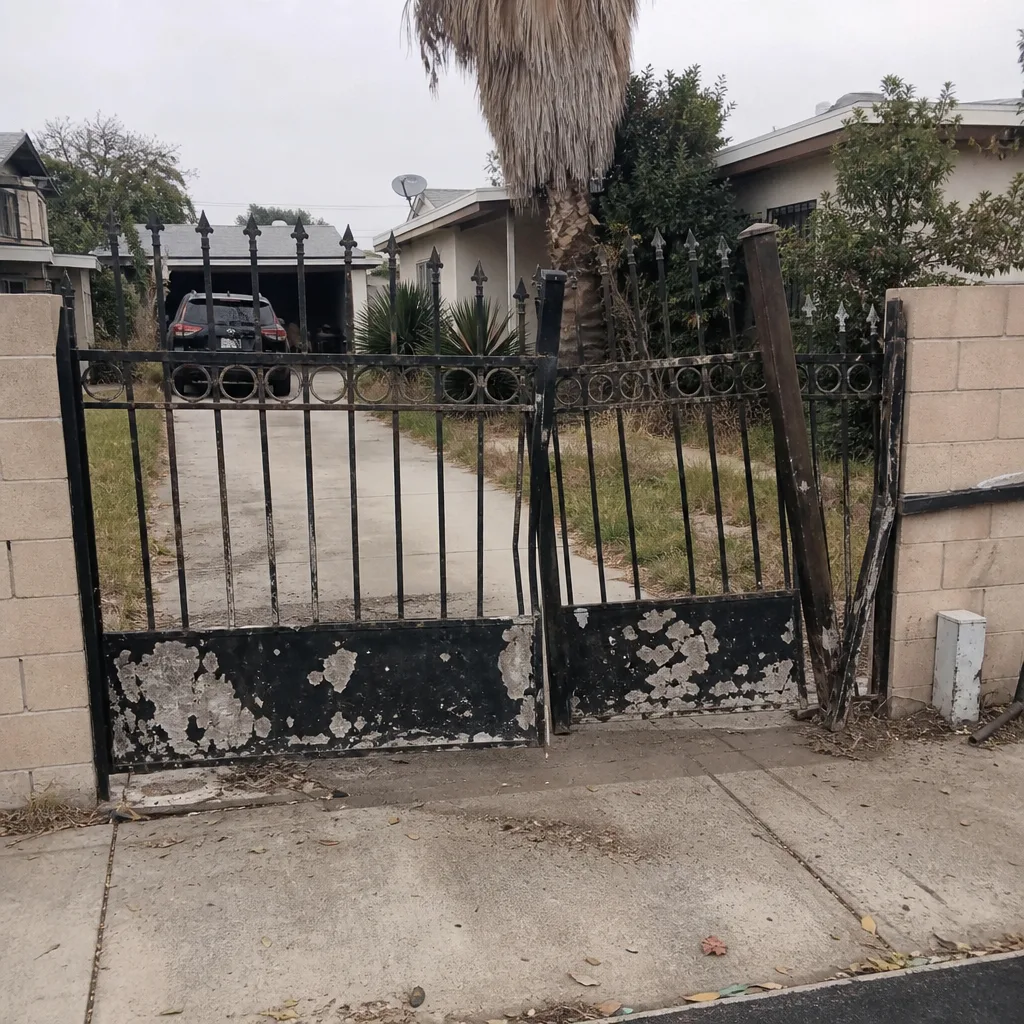
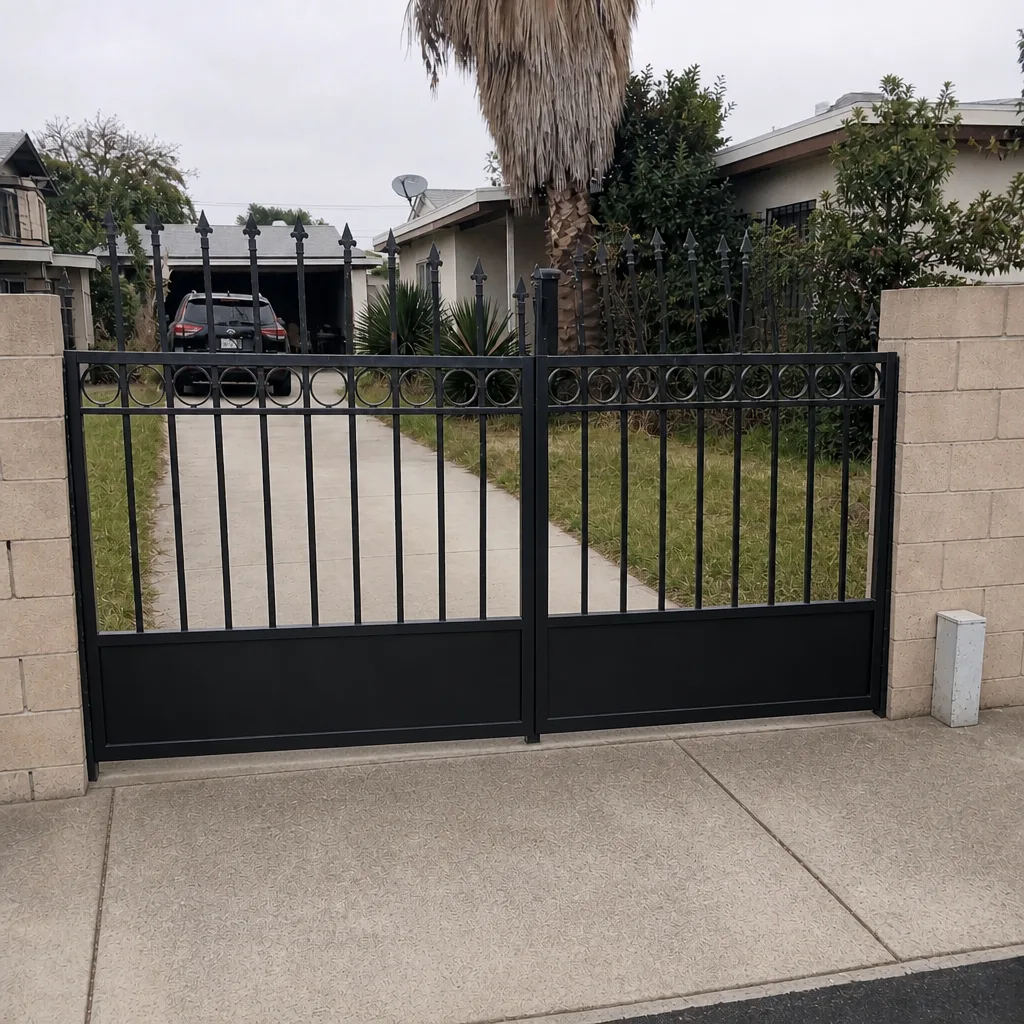
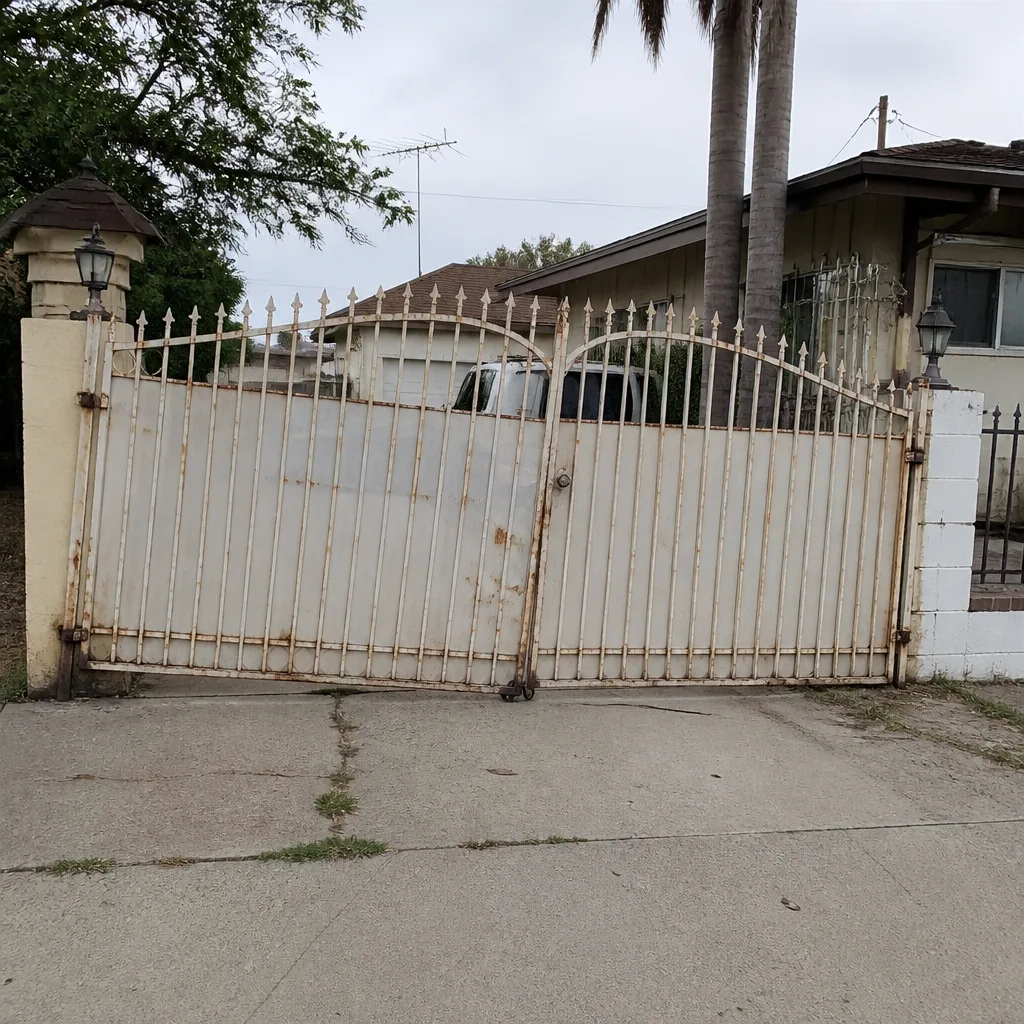
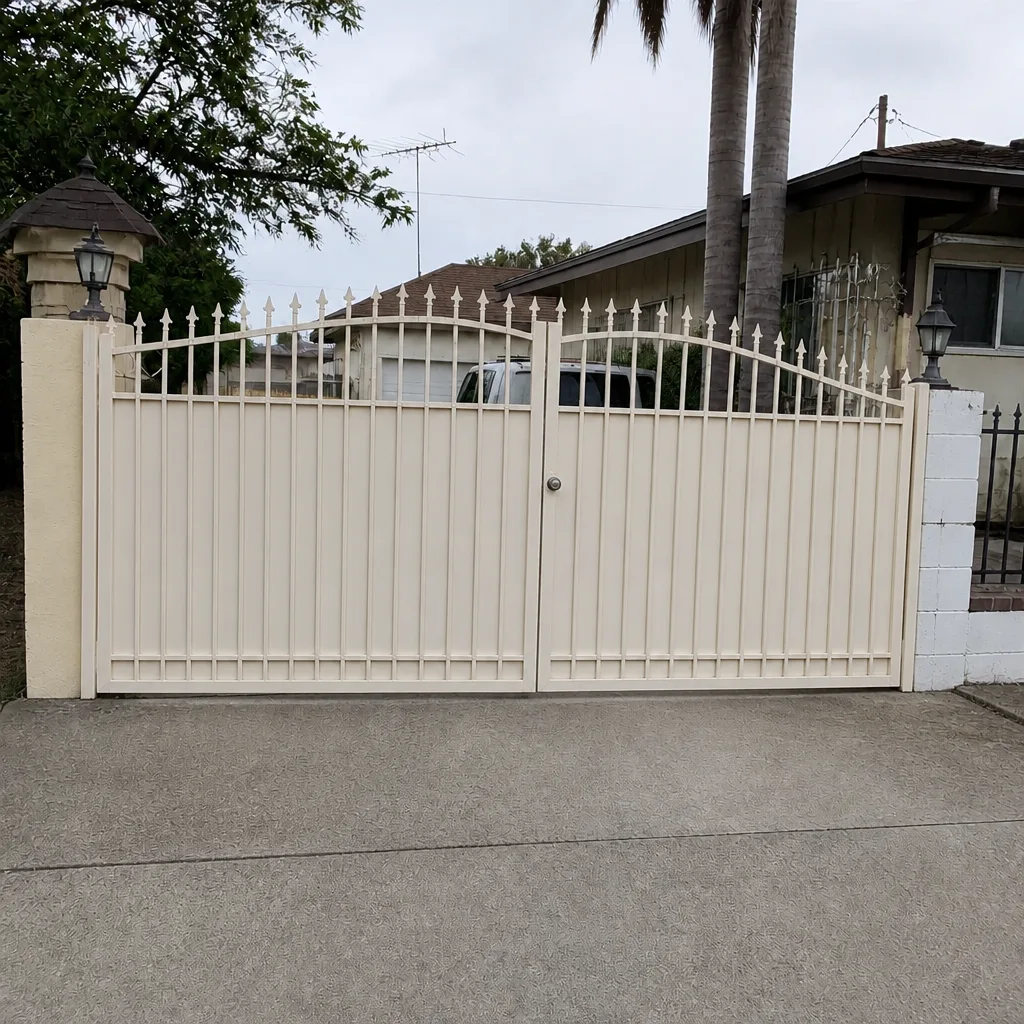
See the difference
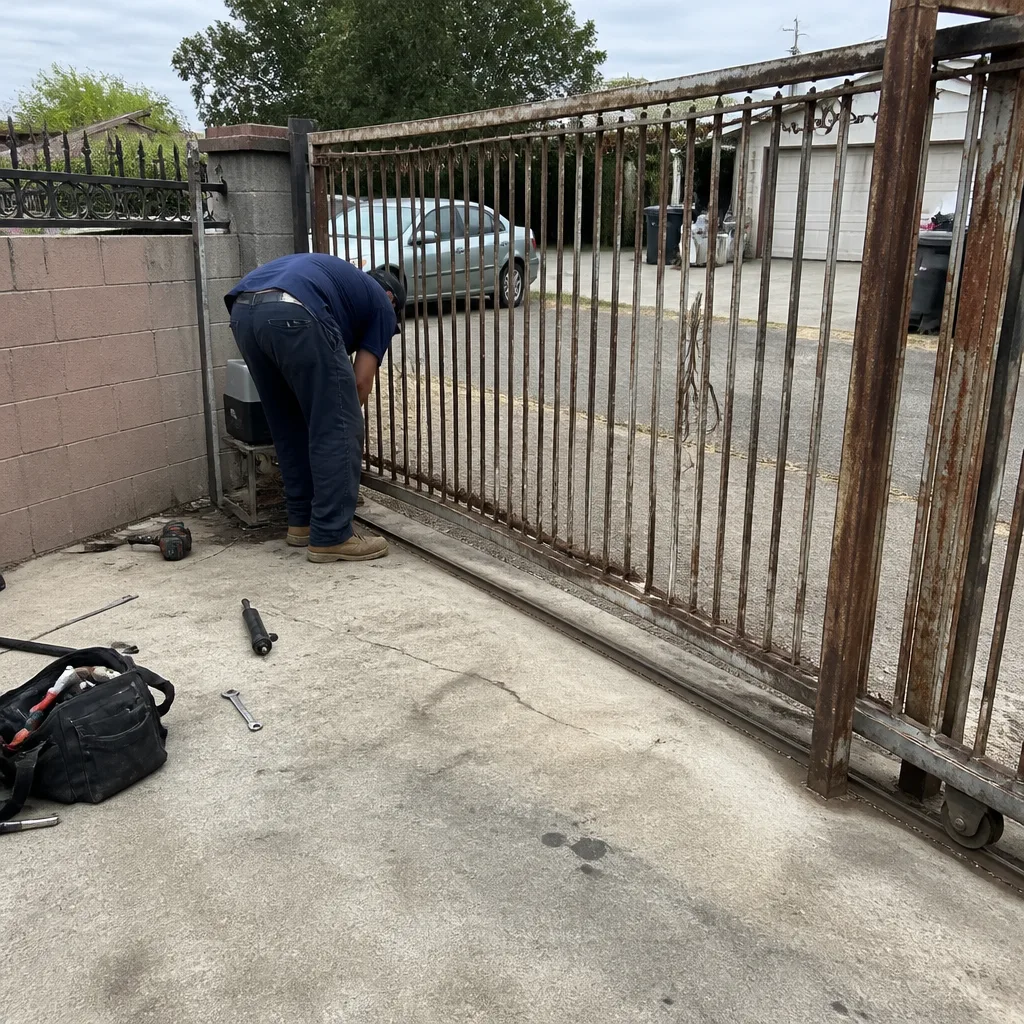 Before
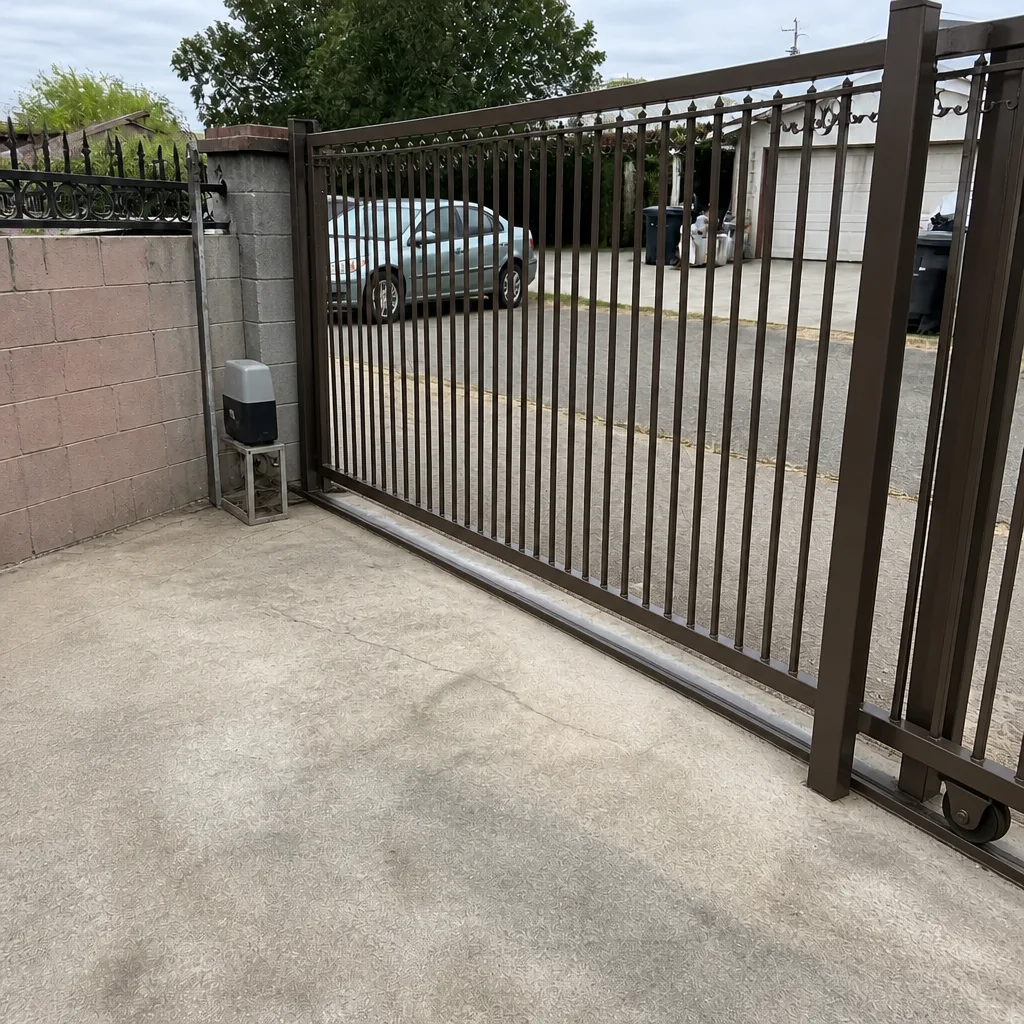 After
 Before
 After
 Before
 After
Frequently Asked Questions
Three targeted maintenance passes per year, in March, June, and October, matches Arleta’s climate stress pattern: pre-heat, peak heat, and pre-Santa Ana. If the gate is older or heavily exposed to direct sun or wind, add a fourth pass in January while condensation cycles and Santa Ana winds are both active.
This is the classic signature of a heat-stressed control board or power supply. The board works within its rated range when the enclosure stays cooler in the morning, but as the pillar heats up in the afternoon sun, the installed operating temperature exceeds what the components can handle. The intermittent failure will become permanent without intervention, usually at the worst possible moment. Call a gate specialist who can test the board under load, not just when it’s cool and cooperating.
Yes, and the damage is cumulative. Wind loads on a swing gate act as cyclic stress on hinges, operator arms, and mounting brackets, and each event loosens hardware a little more. Slide gates suffer through dust-driven grit that accelerates wheel and track wear. The fix is a pre-season inspection around late September, before the wind season begins in Arleta.
Use a soft microfiber cloth and glass cleaner sprayed onto the cloth, never directly onto the sensor. Wipe the lens gently and verify the gate closes normally afterward. During Arleta’s fall fire season, clean the lenses every two weeks or more often if smoke is visible. If cleaning doesn’t fix a false-triggering photo eye, the sensor or its alignment needs professional attention.
We don’t recommend it. The battery backup connects to the control board, which has live AC power inside the enclosure. Disconnecting wires in the wrong order can arc, damage the board, and void the manufacturer’s warranty. An electric gate repair technician can replace the battery, test the charging circuit, and verify the system actually works under a simulated power outage, in about the time it takes you to find the right battery.
Heat-related control board failures in summer and neglected photo eye sensors in fall. Both are preventable with the seasonal calendar in this guide. If you’re in Arleta and your gate is misbehaving, the problem is rarely unique to your gate; it’s usually a seasonal pattern we’ve seen many times before.
The Bottom Line
Arleta’s gate stress comes in three forms: summer heat that cooks electronics, Santa Ana winds that fatigue hardware, and winter condensation that corrodes connections. None of them require exotic fixes, but all three respond to early intervention. Three maintenance passes per year, scheduled around the actual climate pattern rather than a generic calendar, catch problems while they’re still cheap to fix. The photo eye cleaning and enclosure inspection take minutes. The hinge checks take a wrench and ten minutes. The payoff isn’t just avoiding a gate stuck open or closed, it’s knowing your property stays secure through every season Arleta actually has.
Call (855) 473-3106 for a free estimate on any seasonal gate maintenance or repair in Arleta. We answer 24/7. Fast dispatch from 7am to 7pm, Sunday through Friday.
Written by the team at Gate Repair Arleta, serving Arleta since 2018.