
Last updated November 5, 2026
 Wrought iron
 Wood & steel frame
 Farm & ranch
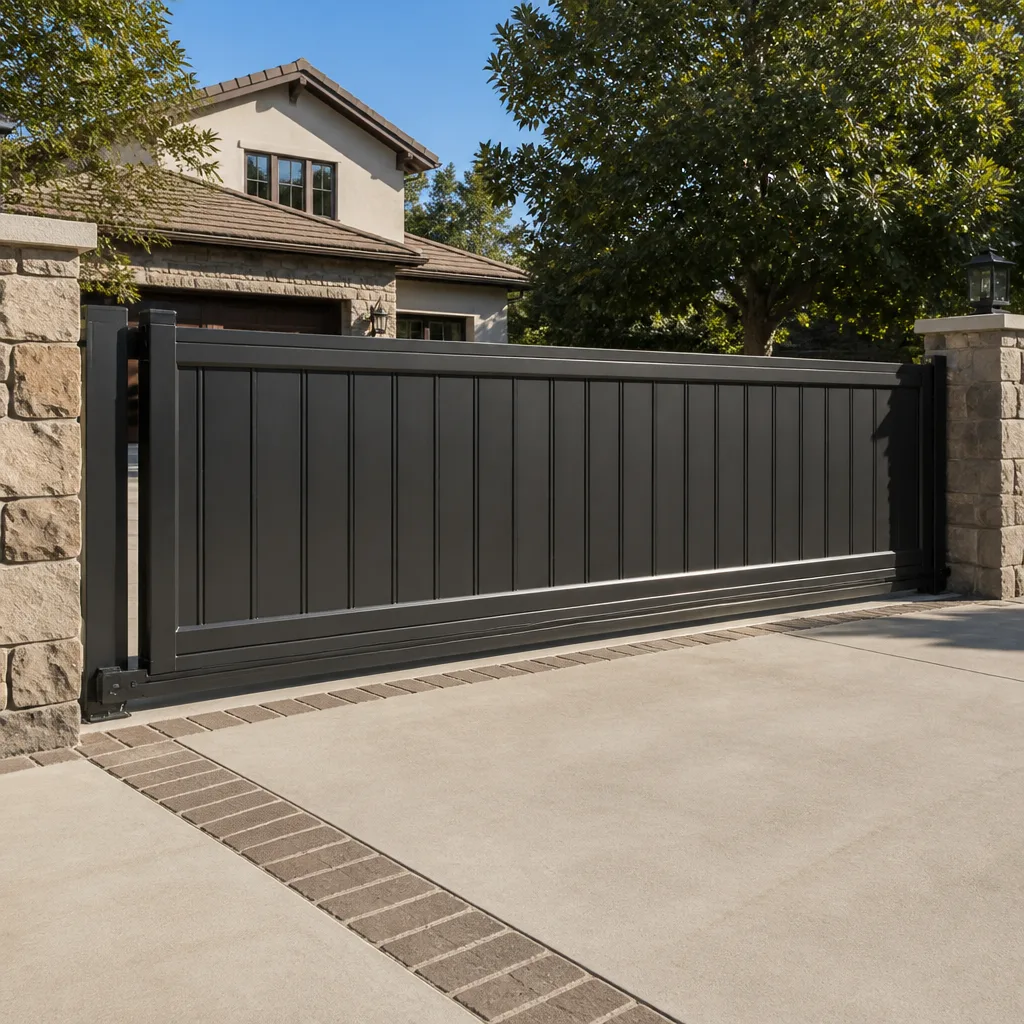 Sliding driveway gates
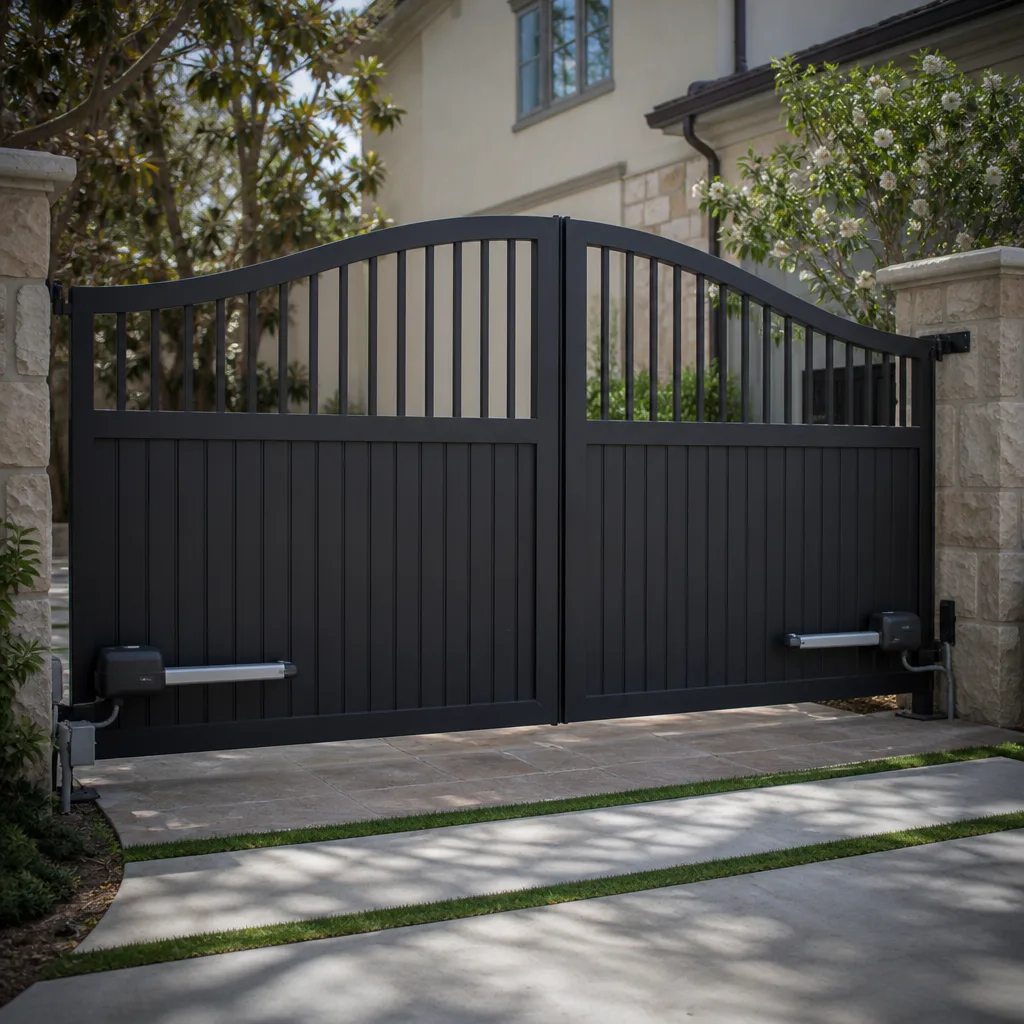 LiftMaster operators
Free on-site gate assessment - hinges, posts, and your LiftMaster or Nice gate operator checked before anything is quoted
The assessment is free and the quote is the invoice.
Get your free estimateHow to Hire a Gate Repair Contractor in Arleta: A Step-by-Step Guide
Ask any contractor to name the drive type on a standard LiftMaster LA500. If they pause, they haven’t worked on enough gates to quote your job accurately. That pause is the difference between a gate specialist and a general handyman who figures he can take a look. Hiring wrong costs more than the repair itself, because a misdiagnosis means replacing parts that were never the problem. This guide walks Arleta homeowners through the exact questions, license checks, and quote reviews that expose who actually knows automated gate systems and who’s guessing on your dime.
Quick Answer
To hire a gate repair contractor in Arleta, verify their California C-61/D28 contractor license for gate automation, ask brand-specific questions about your operator (LiftMaster, FAAC, Linear, DoorKing, and others), get a written quote that lists parts by exact model number, and confirm the diagnostic process before any work begins. Skip anyone who quotes over the phone without seeing the gate or who describes repairs in vague terms like “adjustment” or “tune-up.” Call Gate Repair Arleta at (855) 473-3106 for a free estimate from a team that works on nine major gate brands.
Styles & brands we work with
- Wrought iron
- Wood & steel frame
- Farm & ranch
- Sliding driveway gates
- LiftMaster operators
Table of Contents
- Five Questions That Separate a Gate Specialist From a Handyman
- What License Should a Gate Contractor in Arleta Actually Hold?
- How to Read a Gate Repair Quote Line by Line
- What a Proper Diagnostic Looks Like
- Red Flags Unique to the Gate Repair Industry
- What Arleta Homeowners Should Know About Gate Wear
- Your Step-by-Step Hiring Checklist
- Common Mistakes to Avoid
Five Questions That Separate a Gate Specialist From a Handyman
Before you schedule anyone, make one phone call and ask these five questions. A specialist answers without hesitating. A generalist starts talking around the question. That’s the signal you’re listening for.
- “What brand is my operator, and what’s the most common failure on that model?” If you have a Linear gate opener, a specialist should immediately reference the specific control board or limit switch issues common to Linear units. If you have a Ghost Controls system, the conversation should turn to battery health and receiver sensitivity. Someone who works on gates every week knows the failure patterns by brand. Someone who doesn’t will say “we’ll take a look” without naming anything.
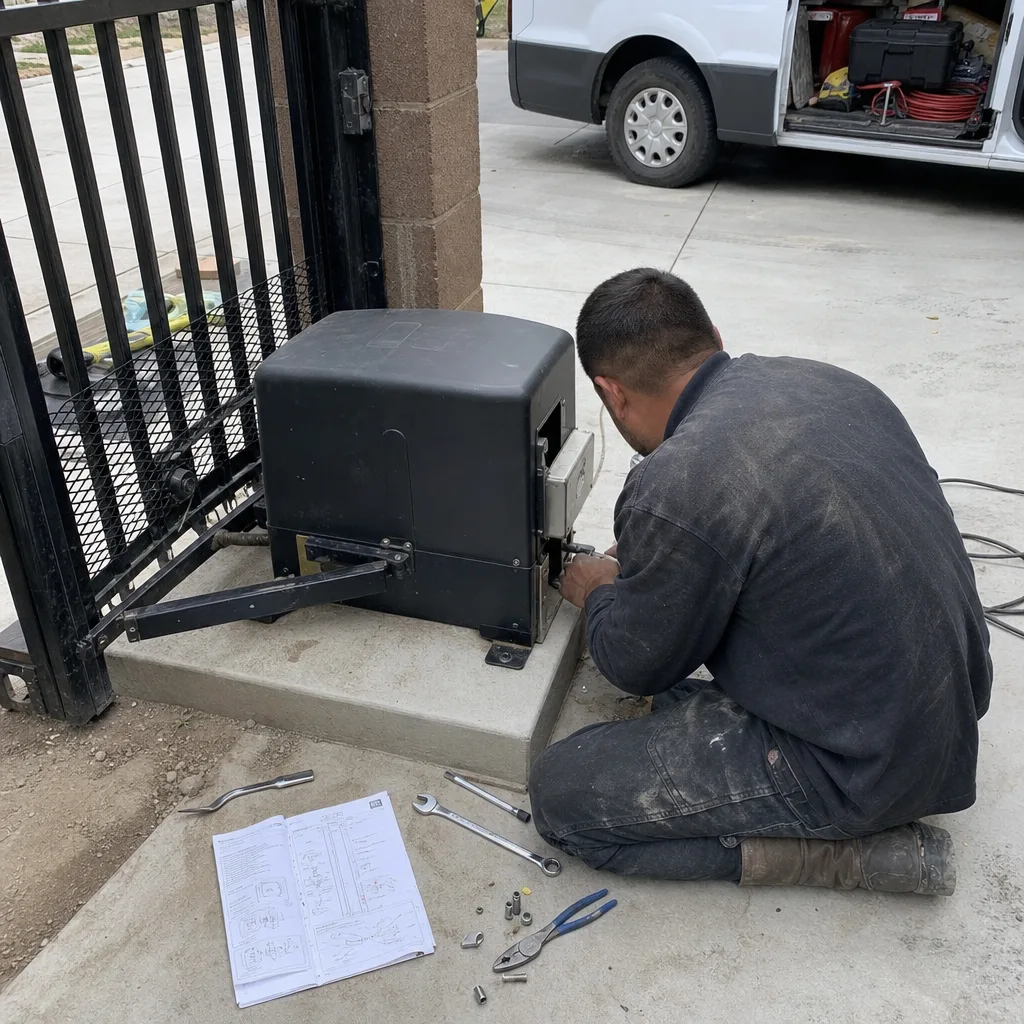
- “Walk me through your diagnostic process.” The answer should involve testing voltage at the control board, checking limit switches, measuring motor draw, and inspecting the safety edges, photo eyes, and wiring connections. If the answer is “we just replace the motor and see if that fixes it,” you’re talking to a parts-swapper, not a diagnostician.
- “Do you carry parts for my brand, or do you order them after the visit?” A gate specialist who works on Viking and DoorKing systems typically keeps common control boards, remotes, photo eyes, and capacitor kits on the truck. If every part has to be ordered after the diagnosis, that’s not automatically a disqualifier, but it tells you the contractor doesn’t specialize in your brand.
- “What’s the difference between repairing my operator and replacing the whole unit?” A straight answer weighs the age of the motor, the cost of the failed component, and the condition of the overall system. A vague answer pushes replacement because it’s easier to quote. A specialist recommends replacement when it genuinely makes sense, not when diagnosis gets hard.
- “Will the warranty cover parts and labor separately?” This is a test of how the contractor stands behind the work. A real answer specifies the manufacturer’s warranty on parts and the shop’s warranty on labor, in writing. A hedge here means you’re carrying all the risk if the same part fails in three months.
We’ve asked versions of these questions on hundreds of jobs across Arleta. The contractors who answer them cleanly tend to do clean work. The ones who don’t tend to leave homeowners with a gate that works for two weeks and fails again.
What License Should a Gate Contractor in Arleta Actually Hold?
In California, gate automation work falls under specific contractor license classifications. A C-61/D28 license covers doors, gates, and activating devices. That’s the classification for contractors who install and repair automated gate operators, safety systems, and access controls. A general building contractor with a B license can technically pull a permit for a gate installation, but the electrical and automation components of an operator are where the D28 classification matters.
An unlicensed handyman can legally only perform work under a specific dollar threshold, and in most cases that threshold excludes automated gate repair because of the electrical work involved. We’ve seen homeowners in Arleta hire a handyman to fix a gate motor, only to discover the wiring wasn’t to code and the safety edges didn’t function. The repair cost more than the original quote, because a licensed contractor had to come behind and correct it.
Ask for the license number, then verify it on the Contractors State License Board website. It takes two minutes. A legitimate contractor gives you the number without hesitation. Anyone who deflects on the license question gets crossed off the list.
Beyond the license, confirm the contractor carries general liability insurance and workers’ compensation coverage. Gate motors pull 120 or 240 volts, and slide gates weigh hundreds of pounds. You want a contractor whose insurance covers both property damage and injury on your property.
How to Read a Gate Repair Quote Line by Line
A gate repair quote tells you more about the contractor than any conversation. Vague quotes produce vague results. Specific quotes produce specific results. Here’s what to look for when the estimate arrives.
Parts should be listed by manufacturer and model number. A quote that says “new circuit board” is a guess. A quote that says “DoorKing 8053-081 control board” is a plan. The difference matters because control boards vary even within one brand. A Linear board from one generation doesn’t swap into another. When the quote names the exact part, you can verify the price, confirm the compatibility, and hold the contractor accountable if something doesn’t match.
Labor should be separated from materials. A combined “repair gate: $850” line gives you no way to evaluate whether the price is fair. A breakout showing parts at $420 and labor at $430 lets you compare against other quotes and understand where your money goes.
Diagnostic time should be itemized or waived. Some contractors charge a separate diagnostic fee. Others roll it into the repair cost. Either is fine as long as it’s stated explicitly. What’s not fine is a diagnostic fee that appears after the fact or a quote that says “diagnosis included” but adds a “service call” line item at the bottom.
The scope of work should describe what the repair includes and what it doesn’t. A proper quote says something like “replace failed control board, reprogram all remotes and keypad, test safety edges and photo eyes, verify proper closing force.” A weak quote says “fix gate operator.” The first one sets expectations. The second one sets you up for a surprise.
Avoid quotes that read like a menu without prices. “Motor replacement: $TBD after we open it up” is a red flag unless the diagnostic found something genuinely unknown. In most cases, by the time a contractor writes the quote, they should know what failed and what it costs to fix.
What a Proper Diagnostic Looks Like
A professional gate diagnostic follows a sequence. It starts with the simplest possible cause and works toward the most complex. That sequence protects you from paying for a motor when the problem was a dead battery in the remote, or paying for a control board when the problem was a misaligned photo eye.
- Power verification. The technician checks the outlet, breaker, and the operator’s power switch before touching anything else. A surprising number of “dead gates” are simply unplugged or on a tripped breaker.
- Remote and receiver testing. The tech verifies whether the remote is transmitting, whether the receiver is picking up the signal, and whether the issue is range-related or total failure. For Mighty Mule and Ghost Controls systems, this includes checking the battery voltage in the remote and the condition of the receiver antenna.
- Limit switch and travel check. The tech tests whether the gate opens and closes to the correct positions, stops where it should, and reverses when it hits an obstruction. Limit switches that drift cause gates to stop midway, overrun the track, or reverse unexpectedly.
- Safety system testing. Photo eyes and safety edges get tested under load. This is not optional. A gate that closes on a car, a pet, or a person because the safety edge failed is a liability, and a proper diagnostic confirms these systems work before the job is called done.
- Motor draw measurement. The tech measures how many amps the motor pulls under load. High draw means the motor is working harder than it should, which points to a mechanical bind, a failing capacitor, or a motor near the end of its life.
- Control board inspection. Only after the mechanical and electrical basics check out does the tech dig into the control board. Burn marks, swollen capacitors, or corroded terminals are the typical findings. The board either passes or fails; there’s no “we’ll keep an eye on it.”
At gate repair calls in Arleta, this sequence means we find the actual failure on the first visit most of the time. That’s the difference between paying for one repair and paying for a series of “let’s try this next” repairs.
Red Flags Unique to the Gate Repair Industry
Every trade has its shortcuts, and gate repair has a few that show up again and again. Learn to spot them before you sign the quote.
- The vague “adjustment” line item. A quote that says “adjust gate” without specifying what’s being adjusted is a placeholder for “we’ll figure it out when we get there.” Adjustments might mean tightening a chain, resetting limit switches, or shimming a hinge. Each of those should be named and priced.
- Refusal to warrant parts separately from labor. A contractor who says “we warranty the whole job for 30 days” but won’t put the manufacturer’s parts warranty in writing is telling you something. The part has a warranty from the manufacturer regardless of who installs it. You should see that in the quote.
- Parts that get “replaced” without the old part being shown to you. A legitimate contractor shows you the failed control board, the burned capacitor, or the stripped gear. It takes ten seconds and it proves the diagnosis. A contractor who disposes of evidence before you see it may have replaced a part that wasn’t the problem.
- Quotes over the phone without seeing the gate. No reputable gate contractor quotes a repair price without diagnosing the system first. “It’s probably the board, that’ll be $600” is a guess, not a quote. The only honest pre-visit answer is a price range, and even that comes with caveats.
- Pressure to replace instead of repair. New operator quotes are legitimate when the repair cost approaches 60-70% of replacement cost, or when the existing system is old enough that more failures are imminent. But a contractor who jumps to “you need a new gate” before diagnosing the current one is selling, not repairing.
- No mention of safety systems. Any gate repair conversation that never touches on photo eyes, safety edges, or closing force is incomplete. Safety systems are not optional add-ons. They’re part of the gate’s function, and a contractor who treats them as an afterthought doesn’t understand automated gates.
What Arleta Homeowners Should Know About Gate Wear
Arleta’s climate means certain gate problems show up more often than others. The San Fernando Valley heat and dry air affect gate components differently than coastal humidity would. Rubber rollers and plastic gears degrade faster in sustained heat. Wiring insulation gets brittle after years of UV exposure. Metal components expand and contract with temperature swings between cool nights and hot days, which gradually works bolts loose and shifts gate alignment.
Dust is the other factor. Arleta sits in a valley where fine dust and sand blow through on a regular basis. That dust settles into gate tracks, chains, and limit switch housings. It accumulates on photo eye lenses until the beam gets blocked and the gate refuses to close. It works into control board enclosures and bridges electrical connections. Most gate failures aren’t catastrophic. They’re the slow accumulation of heat stress and dust in exactly the wrong places.
This is why annual inspection matters more in Arleta than in milder climates. A gate that gets checked once a year catches a cracked gear before it strips, a dirty photo eye before it fails, a loose chain before it comes off the sprocket. The inspection itself is simple. The problems it prevents are expensive.
For automated gates, the operator is the component most exposed to Arleta’s conditions. Heat and dust accelerate motor wear, and control boards run warm inside enclosures that absorb direct sun. A door or gate that works fine in spring can start acting up in August when the operator overheats and trips its thermal protection. That’s not a defect. It’s a symptom, and a specialist who knows the valley’s conditions recognizes it immediately.
Your Step-by-Step Hiring Checklist
Here’s the entire hiring process, condensed into a sequence you can follow from first phone call to finished repair.
- Identify your gate’s brand and model. The operator has a nameplate or sticker with the manufacturer and model number. Take a photo of it. Without this, every conversation with a contractor starts with a guess. Most Arleta gates we see are LiftMaster, Linear, Viking, DoorKing, Mighty Mule, or Ghost Controls, but the model number matters as much as the brand.
- Call and ask the five questions above. You’re listening for confidence, specificity, and candor. A specialist names the parts, the failure modes, and the diagnostic sequence without checking a script.
- Verify the license and insurance. Get the license number, check it on the CSLB website, and confirm insurance coverage. This takes five minutes and eliminates the unlicensed operators.
- Schedule the diagnostic visit. Expect the tech to spend 30-60 minutes testing the system before quoting the repair. A diagnosis that takes five minutes is not a diagnosis.
- Review the written quote. Check for model-numbered parts, separated labor, warranties, and specific scope language. Ask about anything vague before approving the work.
- Approve the work and get a completion timeline. Most gate repairs in Arleta finish the same day the parts are on the truck. If parts need to be ordered, confirm the timeline in writing.
- Test the gate before the tech leaves. Open it, close it, block the photo eye, activate the safety edge. You should see every safety system working before you sign off on the job.
Common Mistakes to Avoid
- Hiring based on price alone. The cheapest quote on gate repair often comes from someone who skips the diagnostic step entirely. You save $100 on the visit and spend $600 later re-fixing the same problem correctly.
- Ignoring the safety systems. A gate that closes without the photo eye working is dangerous. If a contractor suggests bypassing a safety edge or photo eye to “get it working again,” end the relationship immediately.
- Not asking about the specific brand. General gate knowledge doesn’t help much when your DoorKing controller has a model-specific programming sequence. Brand familiarity shortens diagnosis time and prevents wrong-part orders.
- Accepting a verbal quote. Verbal quotes disappear. Written quotes create a record, specify parts, and give you something to compare against the final invoice.
- Skipping the license check. An unlicensed contractor with no insurance who damages your gate or gets injured on your property leaves you holding the bill. The license check is free and takes two minutes.
- Letting a small problem ride. A gate that’s making a new noise, moving slower, or stopping midway is telling you something. Fixing a $200 gear now beats replacing a $1,800 operator in six months.
- Choosing a generalist contractor. A company that does fences, garage doors, gates, and pergolas is not a gate specialist. Electric gate repair is a niche, and it rewards contractors who work on gates every day.
See the difference
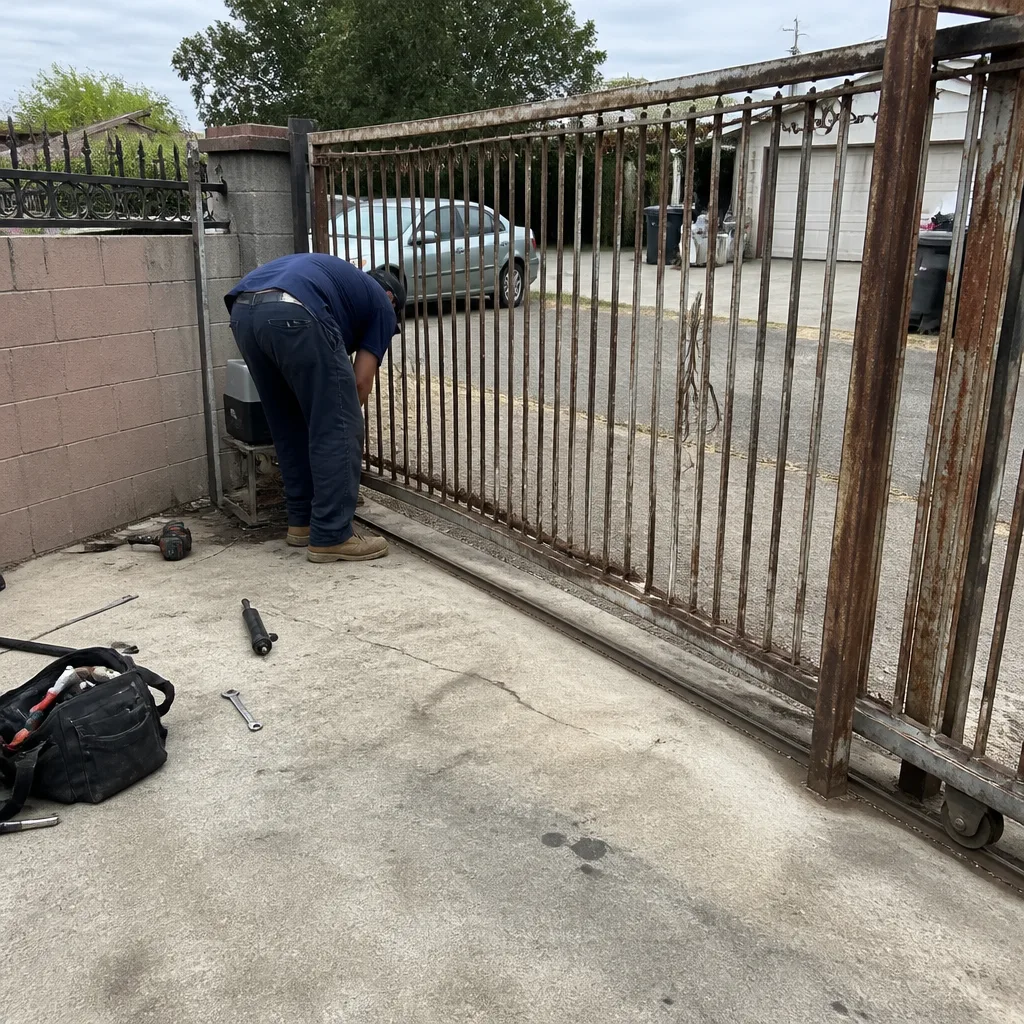 Before
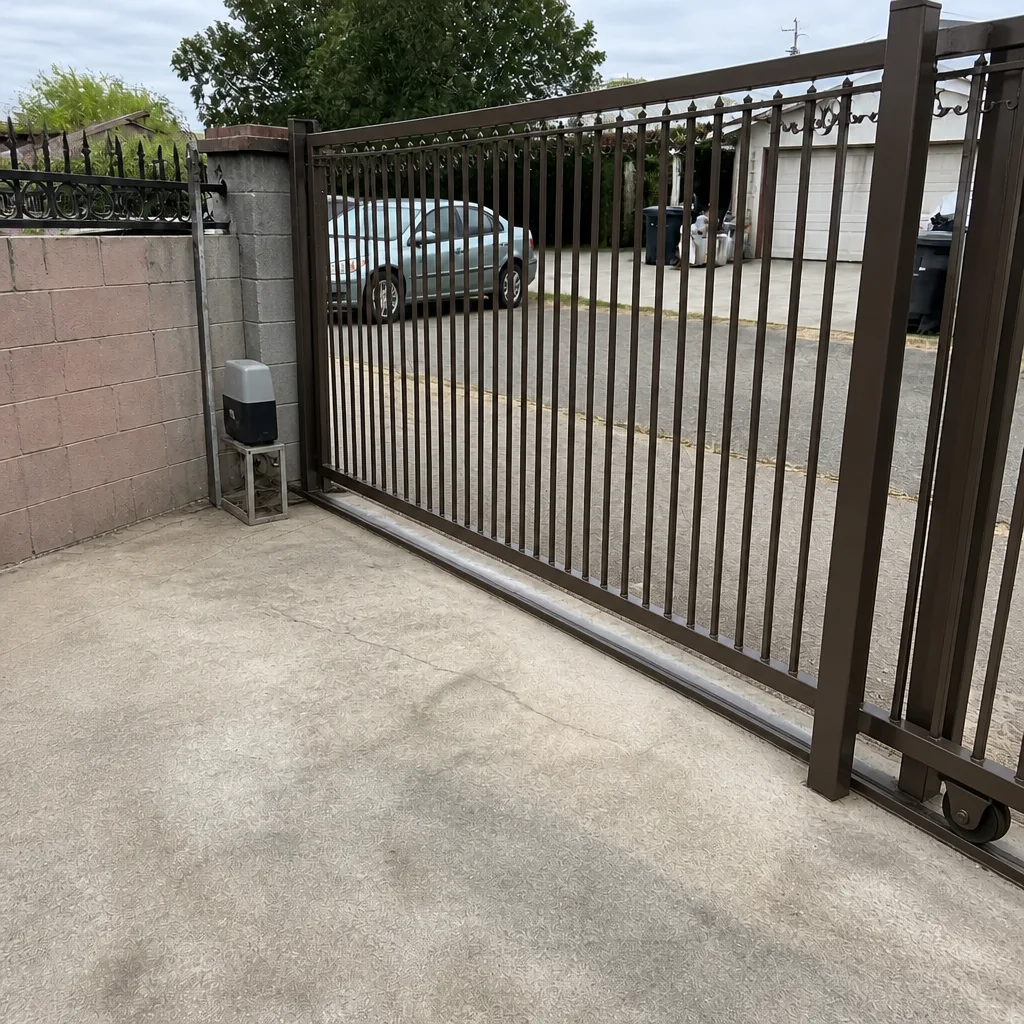 After
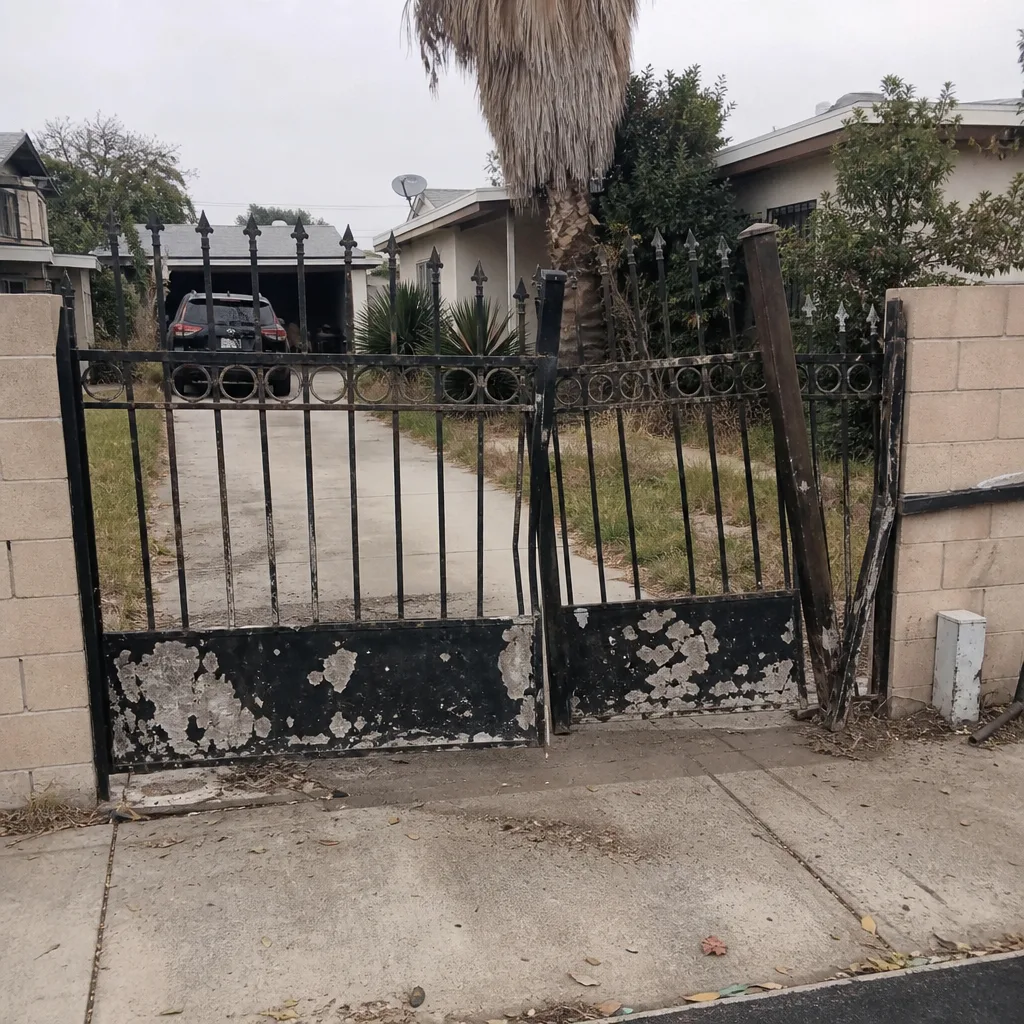 Before
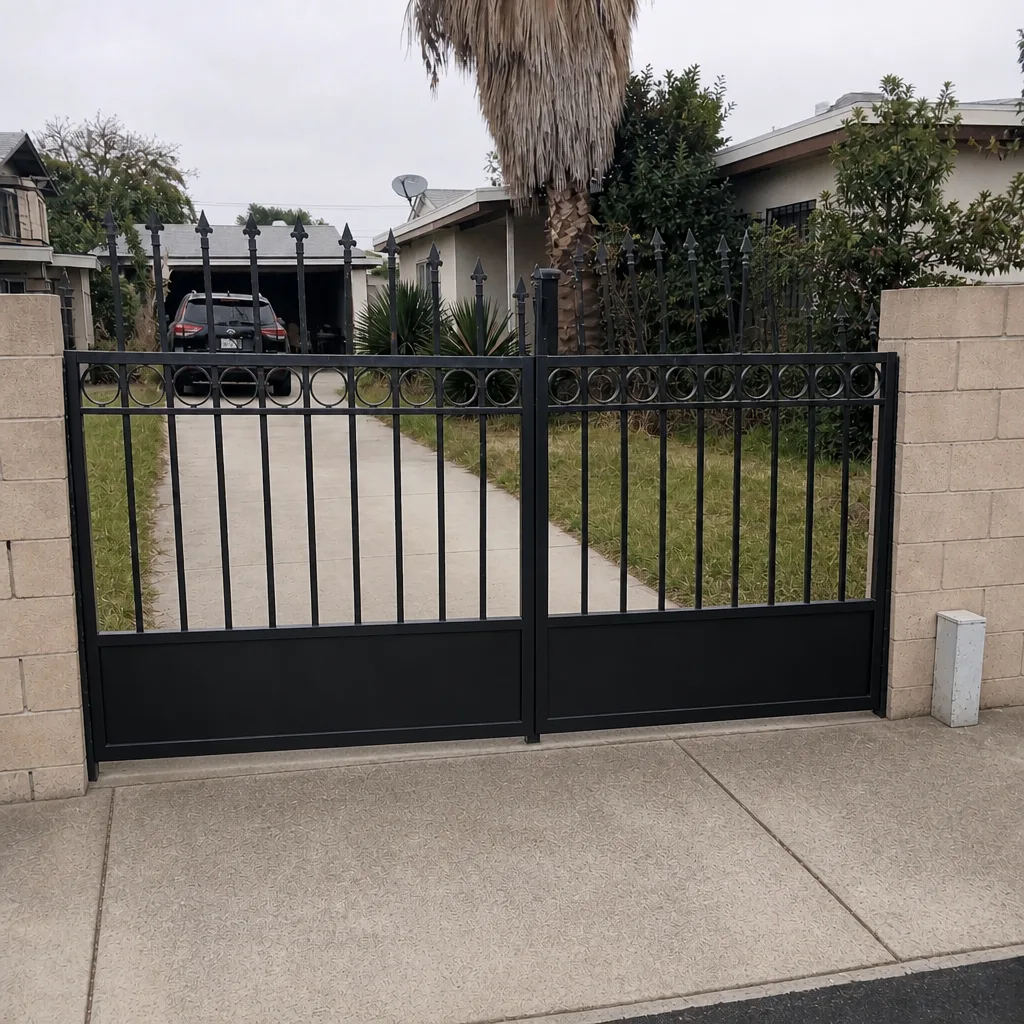 After
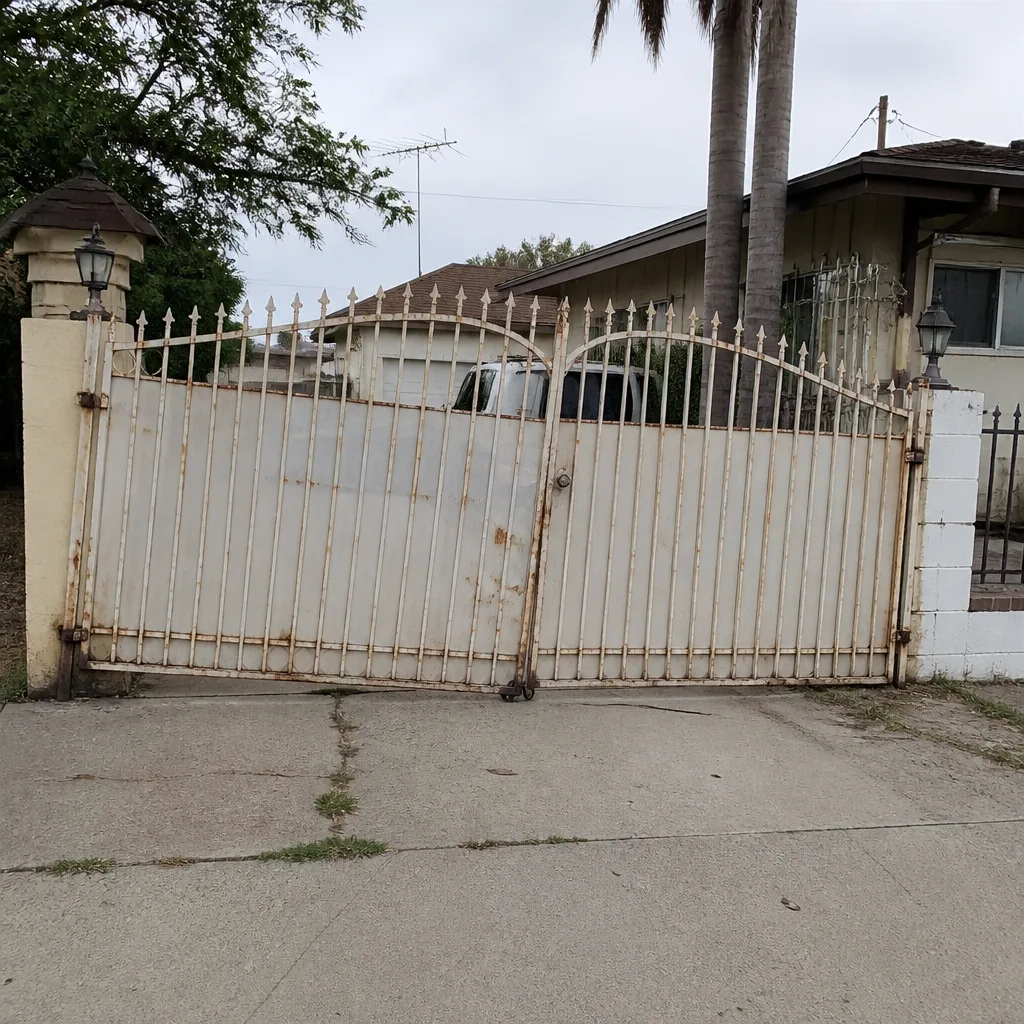 Before
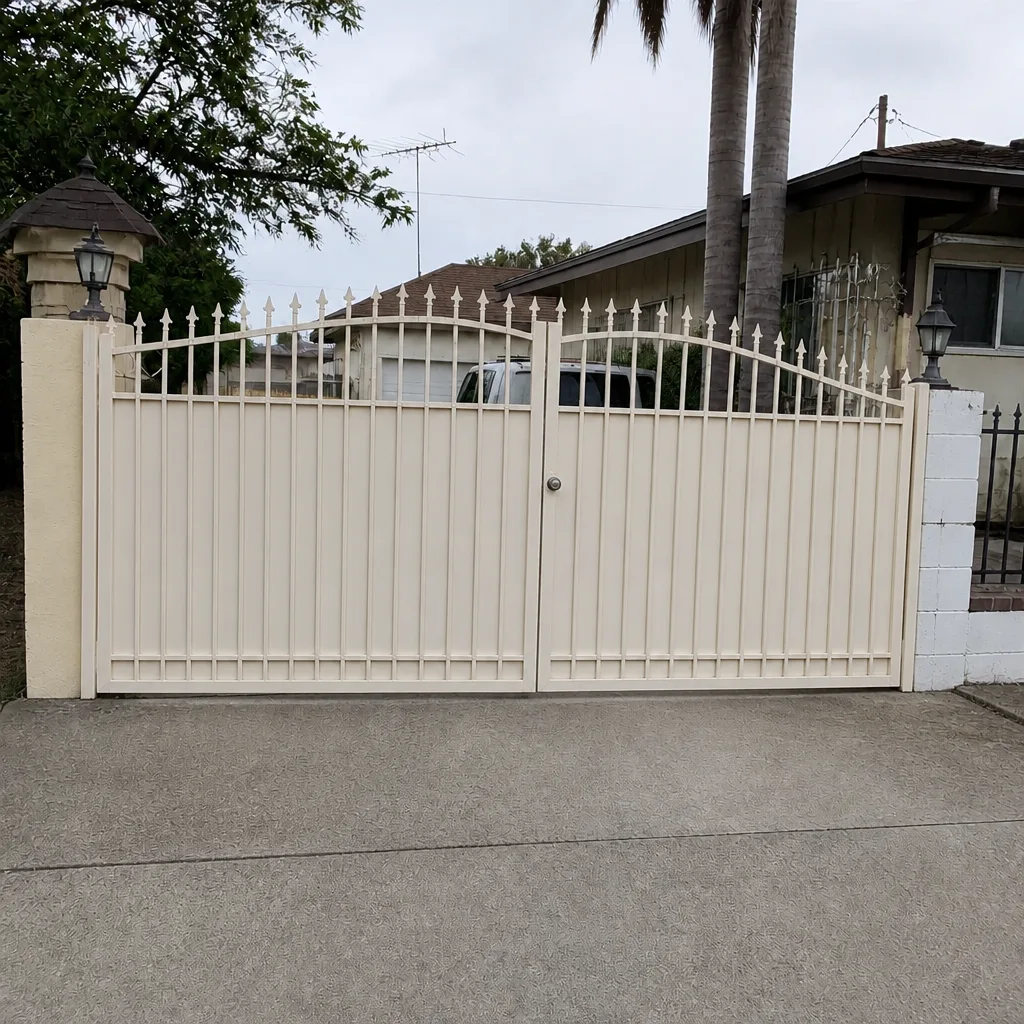 After
When to Call a Professional
Some gate problems are obvious enough to address yourself, like a dead remote battery or a tripped breaker. Others should trigger a phone call immediately. If your gate stops midway, reverses without an obstruction, makes grinding or squealing noises, moves slower than it used to, or fails to respond to the remote or keypad consistently, stop using it and call. Continued use of a failing gate causes more damage to the operator and the track. If the gate hits an obstacle and doesn’t reverse, or if the photo eye light is out, that’s a safety system failure and the gate should be placed in manual mode until a professional arrives. Gate Repair Arleta offers free estimates in Arleta. Call (855) 473-3106. We answer 24/7. Fast dispatch from 7am to 7pm, Sunday through Friday.
Frequently Asked Questions
Gate repair in Arleta typically ranges from $180 to $650 for common repairs like limit switch replacement, photo eye alignment, or remote reprogramming, while control board replacement, motor repair, or major mechanical work runs $650 to $2,200 depending on the brand and the extent of the failure. The exact price depends on the specific operator, the parts required, and what the diagnostic reveals. Call (855) 473-3106 for a free estimate, and the written quote sets the final price before any work begins.
We service and repair gates from nine major manufacturers including LiftMaster, Linear, Viking, Ghost Controls, and DoorKing, covering the majority of residential and commercial systems installed in the Arleta area. If you’re not sure what brand you have, the model label on the operator tells us everything we need to know. Call (855) 473-3106 and we’ll identify the system before scheduling anything.
We answer 24/7 and dispatch technicians Sunday through Friday, 7am to 7pm, with same-day service in most cases. A call outside dispatch hours is booked into the next opening. Closed Saturday. Call (855) 473-3106 to check availability.
We handle gate installation as well as repair, covering the full lifecycle of your gate system. That means the same team that installs your new gate also services it years later, so nothing falls through the gap between an installer who doesn’t do repair and a repair shop that doesn’t install. Ask for a free measure and written price on any new gate or operator.
Yes, the estimate is free and the price is agreed in writing before any work starts. There’s no charge for the visit and no surprise line item added to the final invoice. Call (855) 473-3106 to schedule yours.
Yes, electric gate repair is a core specialty, not an add-on. We work on the motor, control board, wiring, safety edges, photo eyes, and operator as an integrated system, which means the electrical and mechanical sides get diagnosed together rather than piecemeal. Call (855) 473-3106 and describe what the gate is doing; we’ll tell you what’s likely and what the next step is.
The Bottom Line
Hiring a gate repair contractor in Arleta comes down to one question: does this person actually know gate systems or not? You find out by asking brand-specific questions, checking the license, reading the quote for model numbers, and watching the diagnostic process. A specialist passes every test. A generalist blurs the answers. Gate repairs aren’t cheap when they’re done wrong, and the real cost of a bad hire is paying twice for the same failure. Get multiple quotes, but weigh specificity heavier than price. When the quote names the exact part, describes the diagnostic steps, and separates labor from materials, you’re dealing with someone who stands behind the work.
Written by the team at Gate Repair Arleta, serving Arleta since 2018.